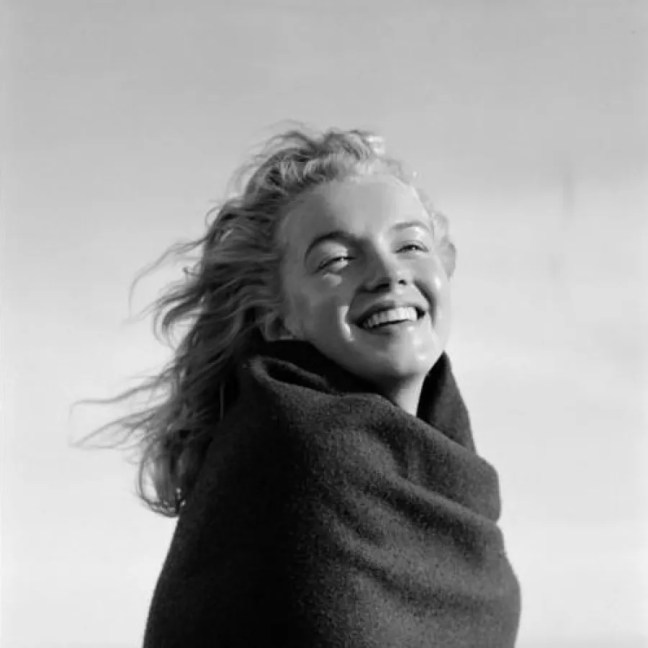
June 1st saw the centenary of the birth of Norma Jeane Mortenson, far better known as Marilyn Monroe, whose iconic status remains as vital and widespread today as it was at the time of her sad, premature death on August 4th, 1962. (I was just eight years old when her demise was announced, but I recall being very affected by the news.) The ‘Marilyn Monroe: A Portrait’ exhibition at the National Portrait Gallery and a two-month season of her films at BFI Southbank are evidence not only of her enduring popularity but of an ongoing need or desire to deepen our understanding of her life, her career, her personality and her talent. The standfirst to an otherwise good cover feature on Monroe’s achievements on screen in the latest issue of Sight and Sound claims: ‘It’s time to see her for what she was – a hard-working, gifted, hugely original actress’; hyperbole, not in its assessment of Monroe, but in suggesting that her acting skills haven’t yet been recognised properly. In truth, while Hollywood may have exploited her and mostly failed to offer the kind of roles she desired and deserved, and while some unsophisticated viewers of the time may have believed she really was a ‘dumb blonde’, Monroe was long ago acknowledged as a major screen presence of considerable ambition, intelligence and talent.
I’m not going to add to the already exhaustive literature interpreting her life, career, personality or talent, but simply offer a few words on the NPG exhibition, which primarily documents her work with various photographers and explores how a number of artists have responded to Monroe as a glamorous star and exemplar of beauty, as an object of admiration, desire, even infatuation… and, of course, as a symbol – particularly in death – of whatever people may want her to symbolise. It’s a fascinating show, and anyone with the slightest interest in Monroe will find a great deal to enjoy – but not, perhaps, that much to surprise, even if your knowledge of her biography is rudimentary. Many of the photos taken by the likes of Eve Arnold, Cecil Beaton, Sam Shaw, George Barris and Bert Stern might already be familiar; so, too, the stills taken during the making of The Misfits. And while Monroe’s natural vivacity, charm and beauty make her an appealing subject for portraiture, still one might tire of the many pin-up shots in swimwear. Still, there are pictures sufficiently different to be, for me at least, highlights. Among the many taken by André De Dienes, a series of 13 photos taken on a beach near Malibu in 1946 (with Monroe wrapped in an army blanket) evokes a intriguing range of moods and emotions*. There’s a marvellously relaxed one of her in a swimming pool, for once without make-up, taken in 1955 by Milton Green; at the opposite end of the spectrum is an unusually ‘arty’ portrait – a luminous swirl of grey, black and white – composed the next year by top cinematographer Jack Cardiff while she was in Britain filming The Prince and the Showgirl.
Besides Richard Avedon’s amusing ‘Fabled Enchantresses’ (1958), in which he had Monroe posing as actresses Lillian Russell, Theda Bare and Jean Harlow, he’s also represented by a stunning portrait taken a year earlier, in which she really does appear barely aware of the camera. Weegee is on display, too, with three pleasingly odd experimental efforts. And then there are the hitherto unseen portraits taken for Life magazine by Allan Grant at Monroe’s home the day before she died: quiet, intimate, relaxed and – inevitably, given the circumstances – very poignant.
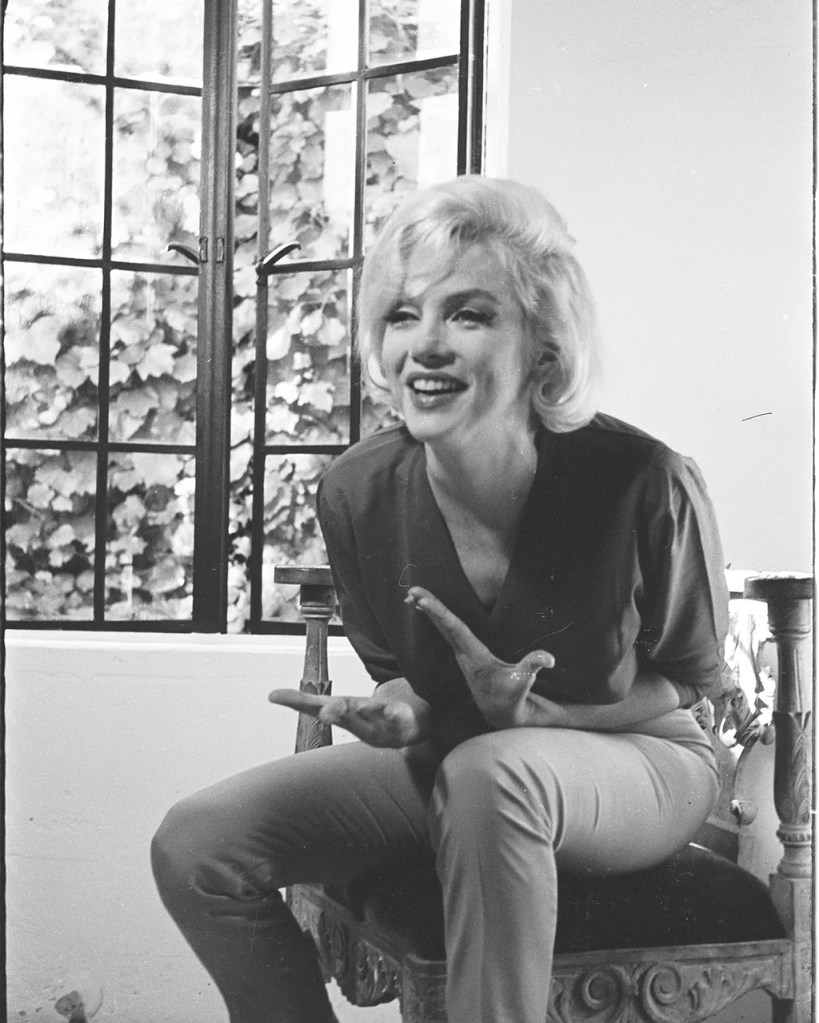
As for the artwork inspired by the star, much of what’s on display is, also perhaps inevitably, Pop Art: Warhol, Pauline Boty, Richard Hamilton, Peter Blake and others; a powerful, Bacon-like triptych by James Francis Gill was my own personal favourite of these. More intriguing, for me, were a small, exquisite memorial box dedicated to Monroe (but with no image of her in the work; she’s intentionally an absence) by Joseph Cornell; and most surprising of all, ‘Homage to Marilyn Monroe’, painted in 1964 by the great Spanish painter Antonio López (whom some may know as the subject of the extraordinary film The Quince Tree Sun, made by Víctor Erice). López depicts Monroe on the balcony of his studio in Madrid – a city she had in reality never visited, though a cinema was screening some of her films when the picture was painted. As such, it is wholly in keeping with the artist’s early, slightly surreal work, which often included cityscapes and rooms populated by faintly ghostly figures, making it a fitting tribute to a beloved actress whose images lingers on, indefinitely.
And now, briefly, for something completely different: a film by the likewise great Spanish filmmaker Luis Buñuel. But perhaps there is a tenuous connection. If the NPG repeatedly reminds us of the agency and control Monroe had over the photographs taken of her, it’s also true that there were many who underrated her talent, objectifying her simply as a sex symbol, a beautiful but dumb blonde bombshell. (There is surely something fetishistic about some of the photos and paintings on show – even, perhaps, about the exhibition itself?) And Buñuel, from his first short Un Chien andalou (1929, made with Salvador Dalí, himself not averse to featuring Monroe in his work) to his final feature That Obscure Object of Desire (1977), would often focus on the pathology of men unable to comprehend women as anything more than objects to be possessed, controlled, dominated or somehow destroyed. Arguably the very greatest of his many explorations of that theme was El (1953), but another of his Mexican films – The Criminal Life of Archibaldo de la Cruz (Ensayo de un crimen, 1955), finally released this week on BluRay in a lovely new 4K restoration – comes pretty close to that earlier masterpiece. It’s a characteristically sly, witty blend of comedy, crime story, psychological study, social satire, melodrama and absurdist parody, with the titular toff traumatised by a childhood incident harbouring occasional murderous impulses towards the women to whom he’s attracted – impulses, it should be said, that are repeatedly thwarted in one way or another, just as the narrative itself is repeatedly interrupted or redefined. (In this respect, the film is not so dissimilar from 70s Buñuel films like The Discreet Charm of the Bourgeoisie and The Phantom of Liberty.) Reality and fantasy feed off one another in the unfailingly polite protagonist’s twisted ambitions, but Buñuel’s surrealist tendencies are, as often, expressed with persuasively restrained subtlety; the ludicrous nature of his self-image as a sophisticated serial killer is clear throughout, but never over-emphasised. Moreover, Archibaldo’s not the only male in the movie with an inability to understand women; his rivals in love are more mature only in terms of age.
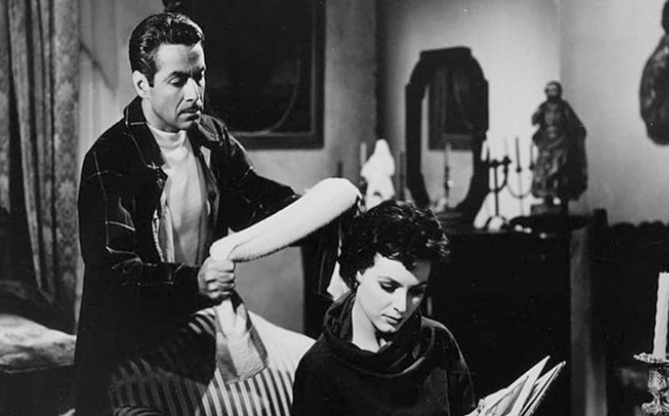
Ernesto Alonso is excellent as the would-be killer, but also memorably good is Miroslava Stern as Lavinia, an object of his desire with rather more nous and spirit than all the men put together. Sadly, Archibaldo de la Cruz was her last film, as she died two months before its release, having committed suicide by taking an overdose of sleeping pills…
Back to Marilyn – see below for my own favourite Monroe films, all of which will screen at BFI Southbank. Incidentally, I note in Wikipedia that one of her last ‘media appearances’ in 1962, a few months before she died, was a visit to the set of The Exterminating Angel in Mexico City. Which prompts the thought: wouldn’t it have been great had she and Buñuel decided to work on a film together?
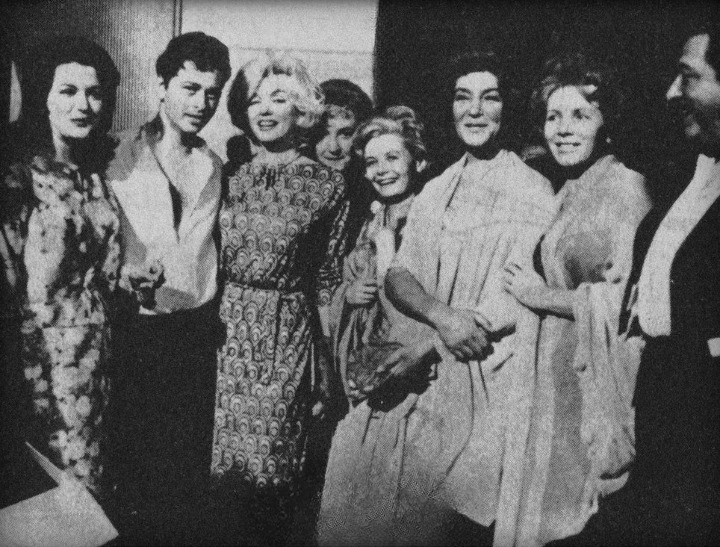
My top six Monroe movies: Gentlemen Prefer Blondes (Howard Hawks, 1953); The Misfits (John Huston, 1961); Clash by Night (Fritz Lang, 1952); Bus Stop (Joshua Logan, 1956); Monkey Business (Hawks, 1952); River of No Return (Otto Preminger, 1954)
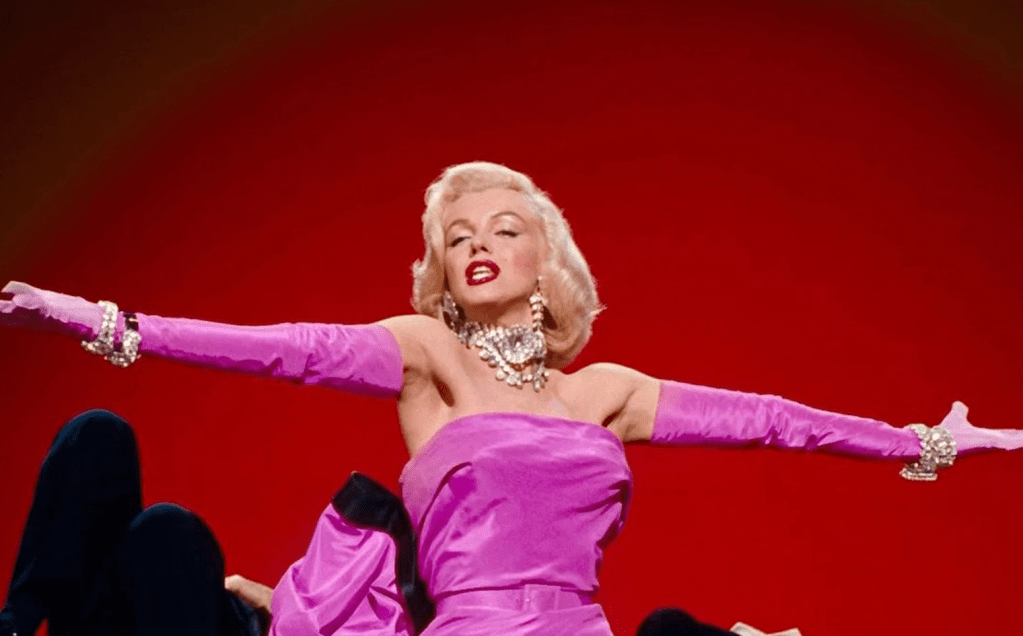
‘Marilyn Monroe: A Portrait’ continues at the National Portrait Gallery until 6 September. The ‘Marilyn Monroe: Self-Made Star’ season runs at BFI Southbank through June and July, with a revival of The Misfits from 5 June. The Criminal Life of Archibaldo de la Cruz is released on BluRay by Second Run. The photograph of Monroe at top is by André De Dienes, 1946 © André de Dienes/MUUS Collection.

