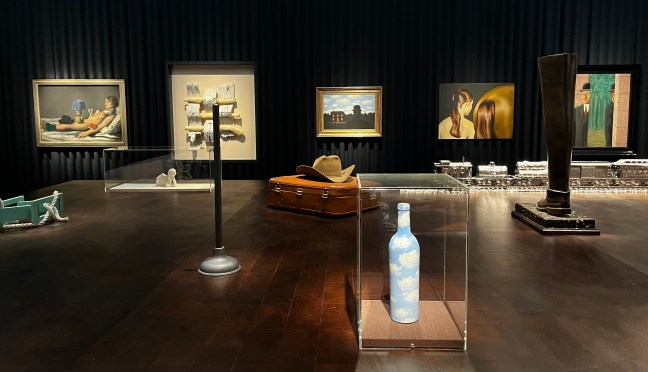
I have loved the work of René Magritte ever since I first encountered it as a teenager at the start of the 1970s; indeed, one of the very first books on art that I bought, in 1974, was Suzi Gablik’s seminal study of the Belgian’s oeuvre, published by Thames and Hudson. (It’s still on my shelves, and still often perused.) If a gallery or museum has paintings by him, I always give them my time, and when I visited Brussels a few years ago, the Magritte Museum topped the list of my must-sees. So there is no way I would have missed the Gagosian’s current show, which not only celebrates Magritte himself but ponders his enduring influence, direct or otherwise, on other artists – more than 40 of them, some represented by paintings and sculptures recently created and being exhibited for the first time.
To claim, as I did above, that ‘This is not a review’ – paraphrasing, of course, Magritte’s famous paintings ‘Ceci n’est pas une pipe’ and ‘Ceci n’est pas un pomme’ – is a little disingenuous, though, to be fair, what follows is less analysis than outright recommendation. Even for this Magritte nut, there are plenty of pictures, sculptures and objects I’d never encountered before, and while his work inevitably overshadows virtually everything else in the exhibition – he was surely, after all, the very greatest of surrealists – there is much to admire and enjoy, not least in how the exhibition juxtaposes the Belgian’s works with those of the other artists.
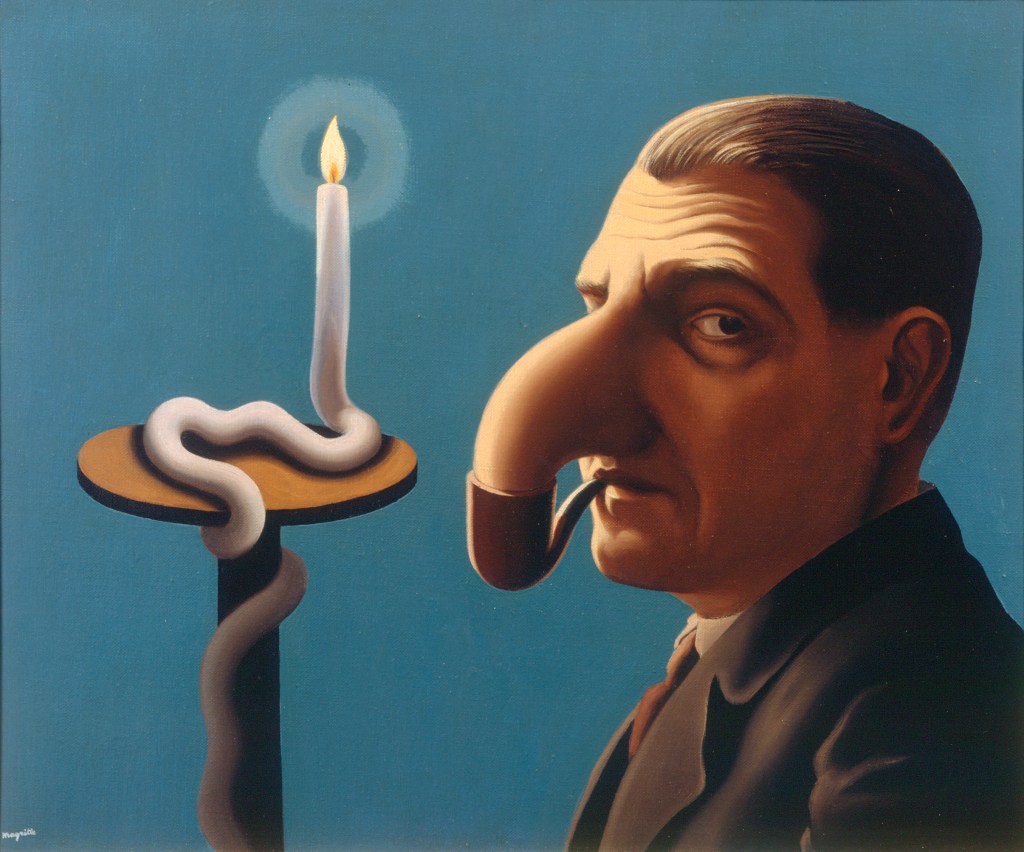
If, for me, Magritte is the greatest of surrealists, that is because his work feels so very direct and strangely familiar; it speaks both to our dreams and to our waking lives, and does so in a way that is at once mysterious, witty, unsettling, sinister, obsessive, intimate, elegant, melancholy, beautiful and profound. For all its oddity – and even if no humans are depicted – Magritte’s art feels utterly human, aligned however improbably with our everyday experiences, emotions, thoughts, fears and fantasies. To quote from the Gagosian’s promotional materials: ‘we encounter dread, anxiety, and ambiguity; humor and vulgarity; boredom and deadpan banality; a questioning of both meaning and the reliability of what we see or read.’
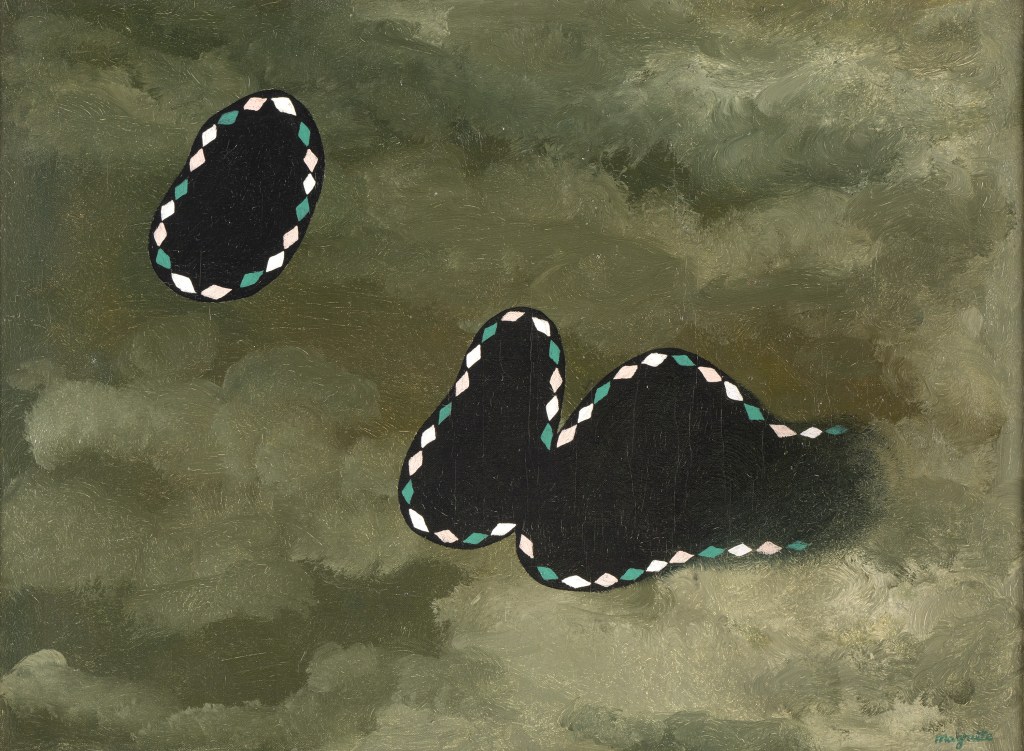
There are too many Magritte marvels on display for me to do more than single out some oddities – the delightful Reclining Nude and deceptively crude The Apparition (both 1928), the cheeky sketch Another Painting Project and the atypical Jean-Marie (both 1948) – and a few utter gems, including The Amorous Vista (1935), The Traveller (1937), This Is a Piece of Cheese (1963-4), Organ-Tones of Evening (1965), and the exquisite pencil drawing Untitled (1966). None of these pieces is exactly surprising, given Magritte’s tendency to revisit, rethink and rework, over and over, a number of figures, objects, landscapes, motifs and themes. This is far from a failing (think Bach, Turner, Ozu and others); his ability to make familiar materials feel altogether fresh in terms of subtly differing details is in evidence throughout. I wandered around the exhibition constantly curious and satisfied – and frequently with a smile, because – the very visible dark side to his sensibility notwithstanding – Magritte’s art is also fun.
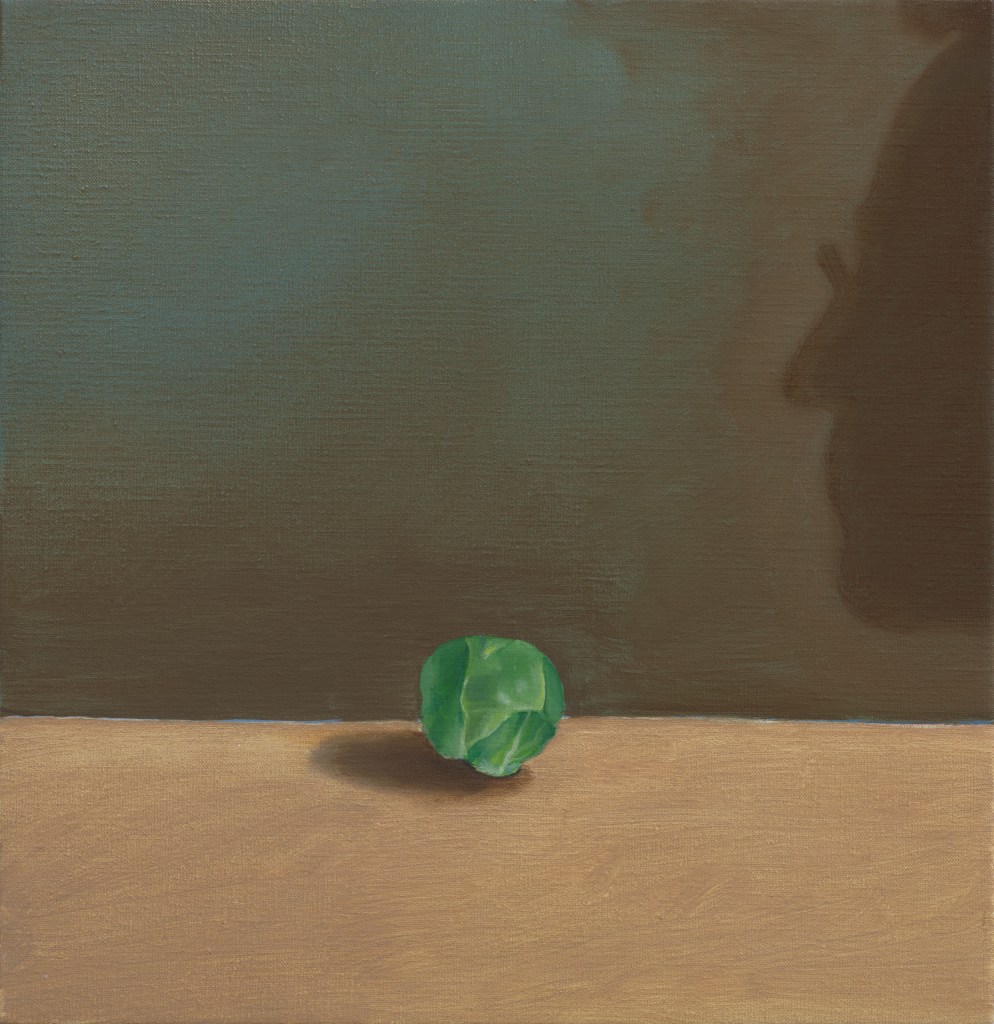
As for the other works exhibited, none is without interest, and some of them I found particularly appealing: my favourites included works by Vija Celmins, John Currin, Allison Katz, Soshiro Matsubara, Giangiacomo Rosetti (whose Pastiche généalogique felt more like a response to Las Meninas), Mark Tansey and Anna Weyant, though you will inevitably have your own.
I could have peppered this piece with pictures galore taken by yours truly, but being a respectful and respectable chap (even if I’ve never worn a bowler), I have gratefully used those provided by the Gagosian, which are much better quality anyway. But as René was fond of reminding us, reality and representation are not the same at all. This is not an exhibition; forget the photos and, if you can, go and see the show for yourself.
This Is Still Not a Pipe: The Afterlife of Magritte is at the Gagosian, 20 Grosvenor Hill,
London W1, from 24 September to 12 December.
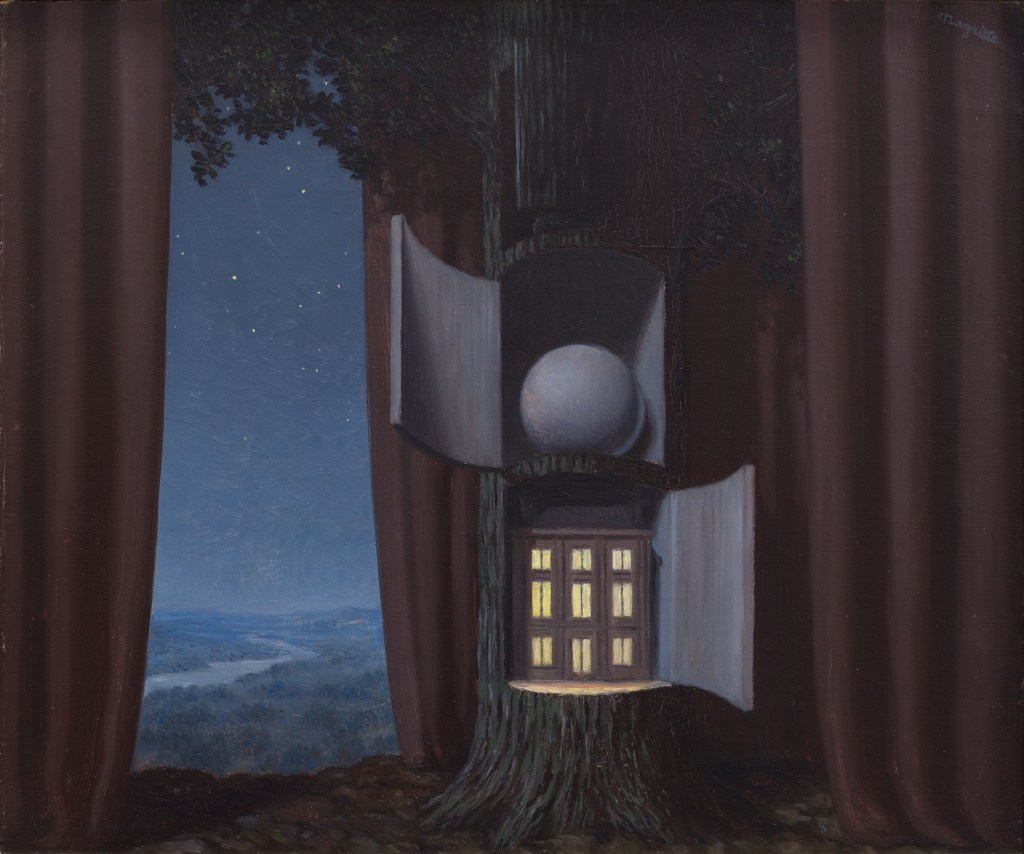
The Philosopher’s Lamp), 1936, © 2026 C. Herscovici/Artists Rights Society (ARS), New York, Courtesy Private Collection, Brussels, Kingdom of Belgium
L’Apparition (The Apparition), 1928, © 2026 ADAGP, Paris and DACS, London, Private Collection, Courtesy Brachot Gallery
Allison Katz: Brussels sprout (and Philip) No. 4, 2025, © Allison Katz, Photo: Eva Herzog, Courtesy the artist and Hauser & Wirth
La voix du sang (Blood will Tell), 1948, © 2026 ADAGP, Paris and DACS, London, Photo: Fredrik Nilsen, Courtesy of a Private Collector, CA, USA

