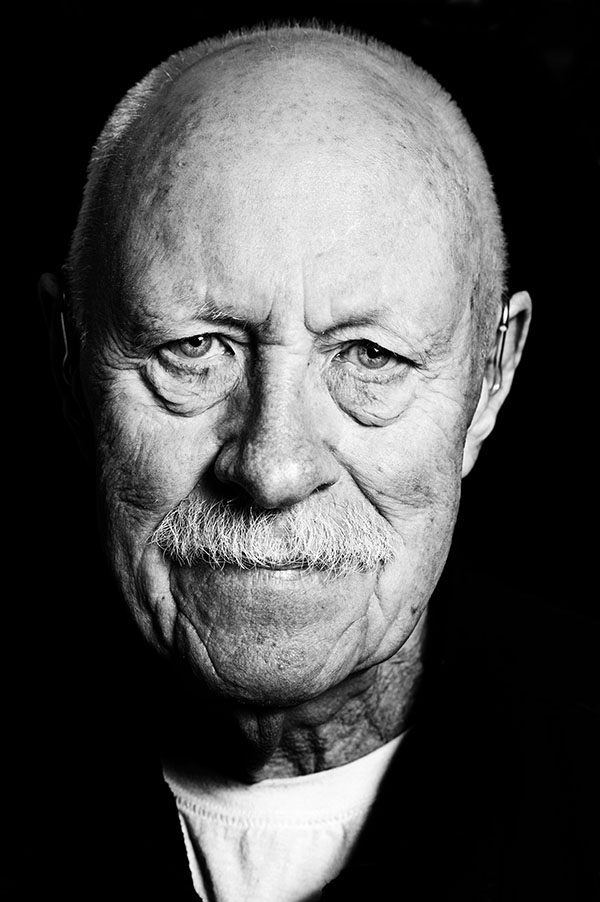
I’ve arrived, sadly but inevitably, at that age where one keeps hearing that friends and former colleagues have passed on. Just a week or two ago, it was Tony Rayns; now, another person I encountered during my years at Time Out, and another terrific writer: Brian Case. (In many ways these two men could not have been more different in interests and personalities; happily, in the brief period when their paths crossed at the magazine, they appeared to get on very well.)
I first met Brian in 1986 or ’87 when we shared the editorship of Time Out’s film pages for a couple of years; he would later move on to ‘the House of Lords’, as he called it, promoted to senior staff writer and sitting alongside the sub-editors and others not affiliated to any particular section. Even after that elevation, he and I would still work closely together, which would mostly manifest itself in the form of long, bibulous lunches – they took place at least once a week, often twice – at which any imminent work projects were seldom discussed. Rather, the conversation would range widely through movies, music, books and so forth, with Brian delighting myself and anyone else brave enough to broach the inevitable booziness with anecdotes from his colourful past as a jazz journalist.
That’s how I’d first heard of Brian, reading him in the New Musical Express and Melody Maker; I’d also bought his 1978 book The Illustrated Encyclopaedia of Jazz, co-authored with Stan Britt. On getting to know him at Time Out, I can’t say I learned much from him about writing – our styles were quite different – but I learned a lot about jazz, and rather more. Here was someone who’d interviewed and hung out with many of the greats – if memory serves, he would always speak of Dexter Gordon with particular affection – and he was full of stories, always related in a vividly idiosyncratic form of English that seemed to reveal the influence of Cockney rhyming slang (his dad had, I think, been a London policeman), a Welsh mother, film noir, National Service, the Beats, Philip Larkin (he’d studied at Hull), Cormac McCarthy, jazz and much, much more. If alluding to his clearly beloved daughters, he would invariably refer to them as ‘the saucepans’ (saucepan-lids for kids). If ordering yet another bottle of red at the Greek Gods Taverna in Maiden Lane (a modest, usually far from crowded but very friendly establishment, where Tony Rayns and I once found ourselves sitting a couple of metres away from a massive but sadly mostly mute Marlon Brando), Brian would simply say either, ‘Another soldier, please’ or – still more mystifyingly to the restaurant staff – ‘Un petit soldat, s’il vous plaït’. (I doubt they’d seen or heard of the Godard film in question, since it was then as now hardly ever screened, but tha was something he readily disregarded.) To regular lunchmates – who besides TO staff might include old friends like music critic Roy Carr (whose wife, per Brian, would frequently knit alongside Ella Fitzgerald) and actor-writer Neville Smith (check out the CVs of Alan Bennett and Stephen Frears) – Brian’s somewhat eccentric use of words was crystal-clear; to others, it may have sounded (unlike his immediately captivating writing) utterly incomprehensible.
Brian was a superb journalist, whatever his subject. Music, film, literary chaps (crime fiction especially – James Ellroy included – but also Arthur Miller), but just about anything benefitted from the Case perspective. I remember the magazine being approached by some organisation in Luton suggesting an article on the town (!); the editor wisely sent along Brian, whose opening paragraph, I seem to recall, waxed lyrical on how the iconic image perhaps most evocative of that underrated metropolis was an abandoned supermarket trolley. Characteristic of the man himself, his writing had insights galore, wit, style, originality, colour, energy – a marvellous individuality, too; nobody else wrote quite like him, and his features, especially, were a joy to read. If you can find a copy, there was a late compilation of some of his articles, On the Snap, not to mention a novel from 1968, The Users, described by no less than Anthony Burgess as ‘a remarkable début’.
My own copy of The Users has a dedication – ‘From Chuck to Waldo’ – alluding to the pseudonyms we used for the gossip column in Time Out’s film pages: Chuck Tatum (Kirk Douglas in Billy Wilder’s Ace in the Hole) and Waldo Lydecker (Clifton Webb in Otto Preminger’s Laura), both thoroughly reprehensible hacks who’d kill for a story. Neither Brian nor I were that desperate, ruthless or immoral, but both of us loved the tricks of the trade (though we generally insisted on one-to-one interviews, we each had our own sneaky methods of making sure we got the best out of those frustrating round-table junkets) and revelled in the headily hedonistic but purposeful journalistic lifestyle of the ’80s and ’90s. The long lunches were just part of it (before deciding whether someone was suitable to become a regular writer for the film section, Brian and I would take them to The Greek Gods for a few hours not only to check on their knowledge and taste in movies, but to see how they coped with Brian’s lingo, my pedanticism, and a generous intake of ‘soldiers’). We also enjoyed the work: I have a vivid memory of us both returning late on a Tuesday morning from interviews for the release of The Adventures of Baron Munchausen – me with Terry Gilliam, Brian with Sting – knowing that each of us had to transcribe the interview and come up with a 2,500 feature by Wednesday lunchtime. For years later, Brian – a fantastic fabulist – would describe how we’d both arrived back in the office at the very same minute, asked each other how our respective interviews had gone, then peeled off our jackets, vigorously rolled up our shirt sleeves and sat down on neighbouring desks like the hacks from His Girl Friday to get the job done over an endless stream of cigarettes. (For all I know, he might later have given us green eye-shades as well.) Whatever, we met the deadline and the cover-features went as planned, and by 1.00 on Wednesday we were back in The Greek Gods.
The last time I saw Brian was at the BFI Southbank/National Film Theatre, about a decade ago, following a Q&A I’d just done with Kent Jones after a screening of his documentary Hitchcock/Truffaut. Brian had always adored Hitchcock and the nouvelle vague, so perhaps I should not have been surprised to see him there. Still, I was really chuffed by this brief re-encounter; we’d lost touch. He had some years ahead of me, his experiences in the jazz world very different from mine in film. (His reminiscences about Gordon and Chet Baker were especially interesting.) I’d learned a lot from him, but he never spoke down to me, or to any of the younger staff at Time Out. Like them, I absolutely loved working with him (though I think the only interview he and I ever conducted together was with Kirk Douglas – neither of us would or could cede that one to the other!). He was kind (when my cat Clint had to be put to sleep after our many years together, Brian turned up at work the next day with a framed photo of Eastwood in White Hunter, Black Heart, as a condolent gift), generous, very funny and, as some others have noted, a genuine one-off. That is rare indeed, and I feel pleased, proud and privileged to have known such a person. RIP.
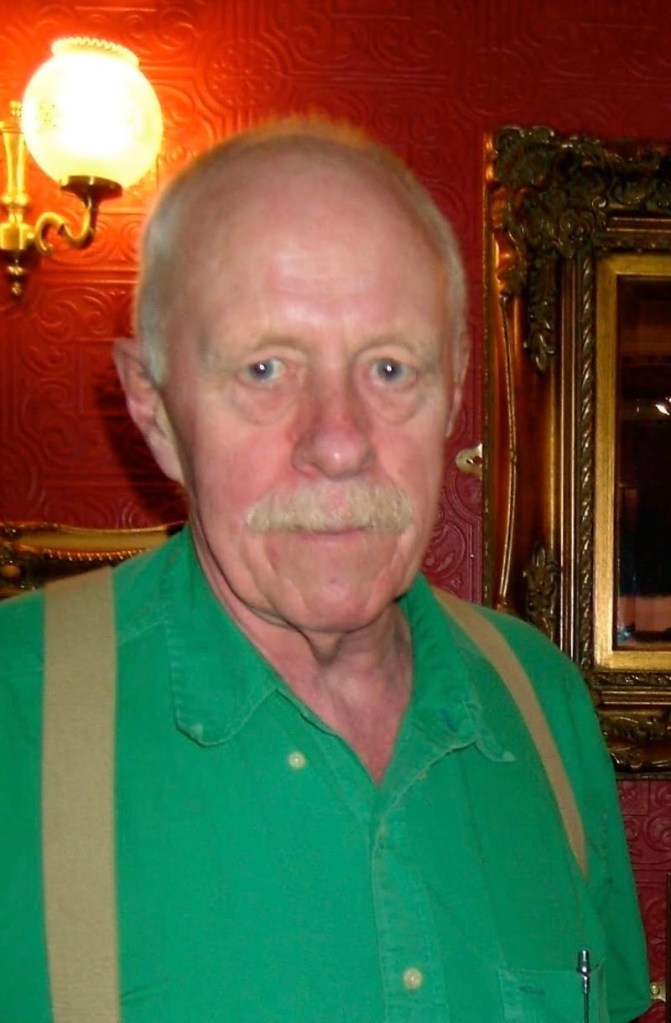
Photo at top by/courtesy of Brian David Stevens. Photo at bottom by the author.


Brian was my gateway drug to jazz as a ‘70s NME reader. His writing was always a stylish delight. It was a huge pleasure to reread his work when we got him on board at Rock’s Backpages (www.rocksbackpages.com). RIP Brian.
LikeLiked by 1 person
Nicely remembered, Geoff. On top of Tony Rayns, that’s a, blow. I came to London in77 and for a while TO was an essential, and not for the listings. I feel like I am closing in on those people whose obits I write, and that in so many ways the era that was so rewarding is longer and longer gone
LikeLiked by 1 person
wonderful. Thank you. Dad would have loved this.
Mol (one of the saucepans)
LikeLiked by 1 person