
Back in the 1990s, when I was film editor at Time Out, the magazine’s classical music critic suggested, at one of our weekly editorial meetings, that he interview an eminent British composer. I can no longer recall whether the proposal was to mark a new composition or a significant anniversary, but I vividly remember the editor’s negative response: ‘Doesn’t he write that plinkety-plonk stuff?’ The chap in question wasn’t my favourite editor – apart from anything else, he’d been very reluctant to run my exclusive Cannes interview with a promising young director by the name of Jane Campion – but I was shocked by his response that day; this was, after all, Time Out – the magazine was supposed to be adventurous! To be fair, however, in this instance his attitude was not that rare. Sadly, even now, new music for the classical concert halls is widely dismissed – often without being given a hearing – as too complicated, inaccessible, tediously cerebral, even unpleasant. Mere noise, in other words.
Of course, fans of music by the likes of Arvo Pärt (a new album of whose music, Tractus, has just been released), John Adams, Philip Glass and Steve Reich will know that things are rather more complicated than that. Even then, some of those composers’ admirers seem reluctant to venture much further. Yes, new music can be challenging in one way or another, but what’s wrong with that? Moreover, there are many composers besides the aforementioned four who write music whose beauty, depth of feeling and imaginative power are immediately discernible. I’ve been thinking about this recently because three new releases provide very different but equally rewarding examples of contemporary ‘classical’ music that is anything but inaccessible.
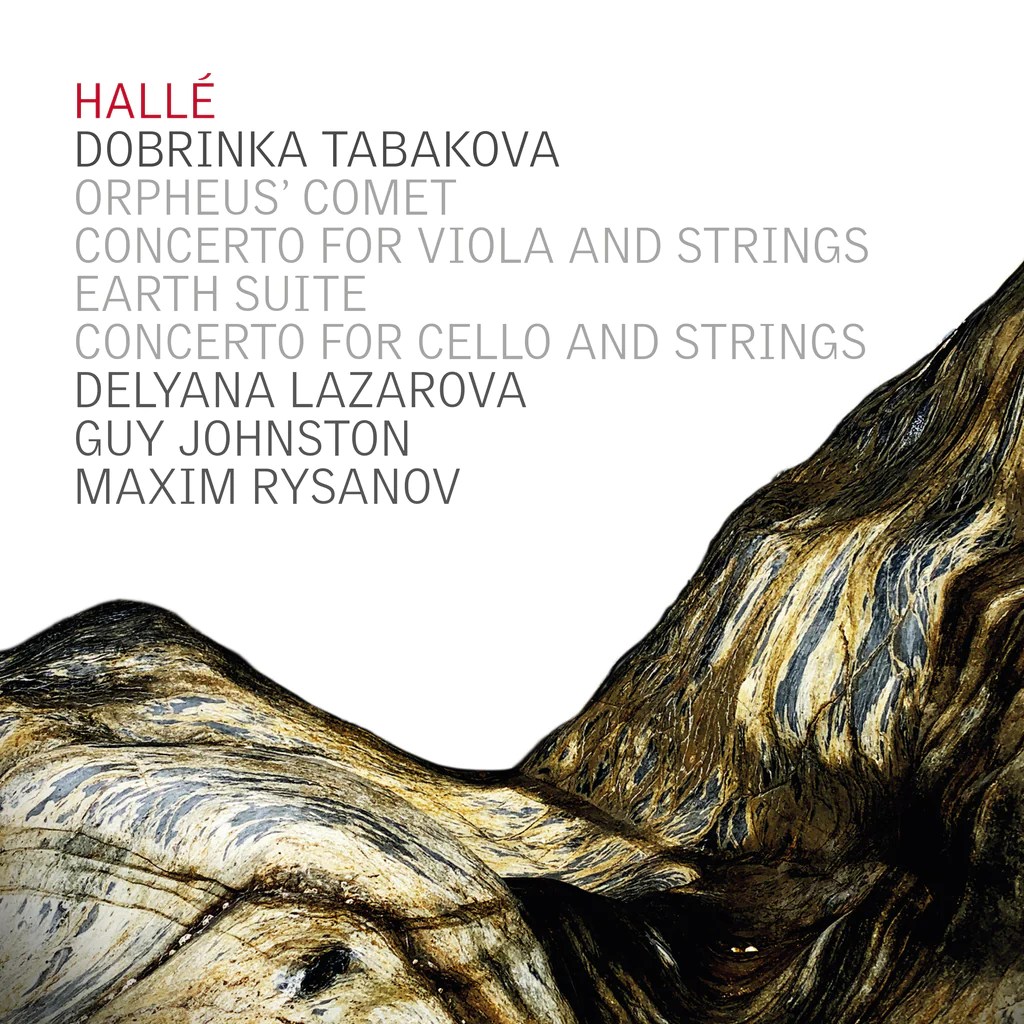
One such is a selection of music by Dobrinka Tabakova, recorded during her time as artist-in-residence with the Hallé, and released by that orchestra’s label. Conducted by Delyana Lazarova – who shares Tabakova’s Bulgarian background – the album consists of orchestral pieces written over a period of nearly two decades, ranging from the viola and cello concertos (2004 and 2008 respectively) to the brief but brightly buzzy fanfare Orpheus’ Comet (2017) and the three parts composed so far for the ongoing Earth Suite: Tectonic (2018), Pacific (2020) and Timber & Steel (2019). The cello concerto, originally written for Kristina Blaumane (who performed it on Tabakova’s superb 2013 debut profile album, String Paths) but here with Guy Johnston as the soloist, is already something of a favourite with its energetic rhythms and swooning, swelling slow central movement, but all the pieces display a bold melodic invention. Though the directness of the writing sometimes suggests the influence of folk music, there is nothing remotely obvious, predictable or simplistic about Tabakova’s music, most of which is richly textured, full of fascinating details and unexpected developments. (It reminds me here and there, by the way, of the Adams who wrote the wonderful Naive and Sentimental Music.) Should evidence of Tabakova’s ‘accessibility’ be required, it might be an idea to check out YouTube, where an abundance of her music suggests it’s enjoyed by performers and non-performers alike.
Rather different but no less impressive is the music of the Austrian pianist-turned-composer Thomas Larcher. I’ve been an admirer of his work since I first heard the album Madhares when it was released in 2010; in an interview for that record, he said, ‘I have in mind a listener who is familiar enough with the traditions of European classical music to recognise its various codes. Someone who can deal with structures and forms, and yet who can enter into a sound world in a relatively naïve manner.’ That someone sounded a little like me; whatever, I’ve been seeking out Larcher’s music ever since. The latest release is called The Living Mountain – appropriately, since he lives in the Tyrol, and apparently loves climbing and running in the mountains – and consists of three pieces: the titular song cycle for soprano (the estimable Sarah Aristidiou) and ensemble; Ouroboros, a cello concerto performed by Alisa Weilerstein with the Munich Chamber Orchestra under Clemens Schuldt; and Unerzählt, a song cycle for baritone and piano (the likewise estimable André Schuen – who previously sang Larcher’s Die Nacht der Verlorenen on a disc also featuring his second symphony – and Daniel Heide).
The cycle The Living Mountain sets fragments of text from the book of same name by Nan Shepherd, the Scottish writer who described her experiences in and feelings about the Cairngorms, and the music – like Larcher’s earlier A Padmore Cycle, composed for the tenor Mark Padmore – is supremely evocative of a mountainous landscape; here is the song In September dawns I hardly breathe or you can watch the whole cycle – same soloist and orchestra, different conductor – here. Larcher’s music doesn’t so much consist of sustained melodies as fragments of melodies, riffs and ruminations, which are brought to memorably vivid life by highly imaginative orchestration; he has a sure sense of drama, often deploying sudden shifts in scale, dynamics, tempo and myriad colours. He loves, too, the slow steady repetition of a single note, like the ticking of a clock or beating of a heart; quick skittering runs of notes up and down the scale; aching laments in the lower registers, silky filigrees in the upper. It’s a highly distinctive harmonic universe, pushing at and stretching the borders of tonality but seldom breaking entirely free. After a few hearings, his music – now fiery and explosive, now sombre or delicate – becomes immediately recognisable. Which is why this release’s combination of the Shepherd setting, the cello concerto, and the final cycle – settings of tantalisingly enigmatic epigrams by WG Sebald (e.g. In the midst of sleep/ a Polish mechanic/ came & for a/ thousand talers/ made me a new/ perfectly functioning head) – feels so utterly coherent, despite the pieces’ different formal properties. (You can see Alisa Weilerstein performing the cello concerto, albeit with a different orchestra and conductor, here.)
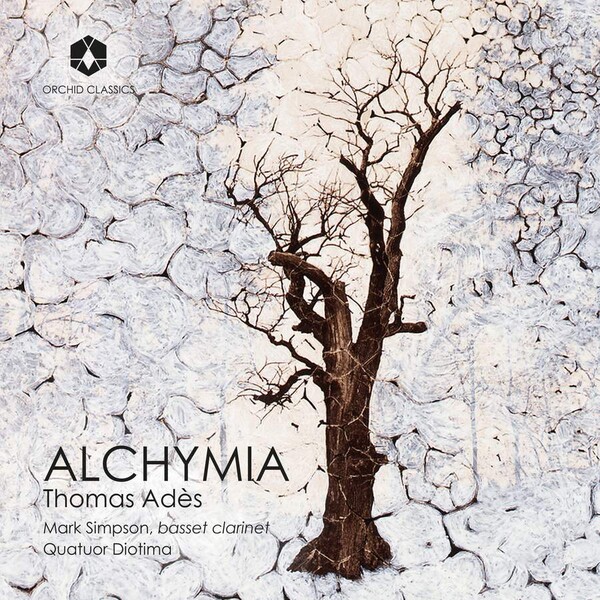
Finally, another Thomas, and another pianist-composer: Thomas Adès (who also conducts, of course). If you’ve yet to hear Adès music, there is plenty to choose from (how does he manage to do so much?), but as good a starting place as any is surely the newly released Alchymia, written for basset clarinet and string quartet. I was fortunate enough to be present at the piece’s premiere at King’s Place in September 2021; it was clear even then that the four-movement work, as performed to perfection by Mark Simpson and Quatuor Diotima, was a major addition to the repertoire. It is the same musicians playing the piece on the new digital release (I hope there will in time be a CD with other pieces added), and the more I listen to it, the more I’m impressed. The inspiration for Adès was Elizabethan alchemy – particularly the idea of transformation – and that’s precisely what this music achieves, taking ideas and motifs from Shakespeare, William Byrd, John Dowland and – rather later – Berg’s Wozzeck, and turning them into something inimitably Adès. The four movements are distinct yet utterly of a generally melancholy piece: A Sea Change takes us sinking slowly down to more agitated currents; the scherzo-like The Woods So Wild has birds and breezes high in a canopy of trees; the gentle sobbing of Lachrymae eventually subsides, but only for a while; and Divisions of a Lute-Song begins with Berg’s gently jaunty dance tune put through light-hearted variations before becoming considerably more meditative, slowly gathering in emotional intensity until it draws to a serenely becalmed close. Alchymia lasts a little under 25 minutes in total, and requires only five instruments, but it feels strangely large; its immediacy is reminiscent of Adès’ first string quartet Arcadiana (which included the sublime O Albion), but there seems to be greater depth here, deriving from something other than the interplay of the clarinet and the strings. It is, finally, as majestically expressive as a symphony. Here’s the first movement as a taster. ‘Plinkety-plonk’? I think not.
Dobrinka Tabakova – Orchestral Works & Concerti is released on the Hallé label; Thomas Larcher – The Living Mountain is released by ECM; Thomas Adès – Alchymia is released digitally by Orchid Classics.
 notes and observations by Geoff Andrew