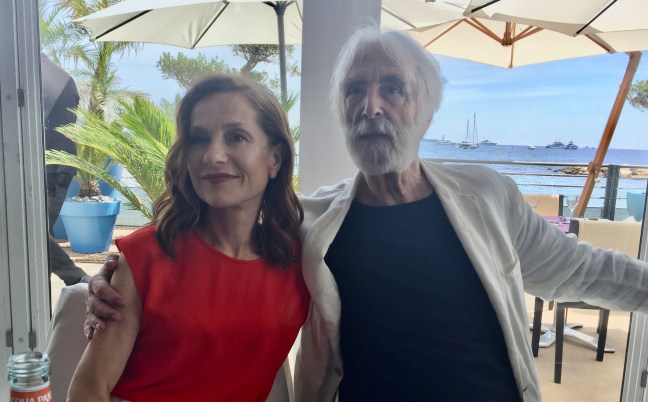
It is our loss that Michael Haneke, undoubtedly one of the most important writer-directors of recent times – and, in my opinion (for what that’s worth) probably our greatest living filmmaker – seems no longer to be at work. Before Covid hit, the Austrian had apparently written a television series about the effects of globalisation (if memory serves, that is – I haven’t seen the script or spoken to him about it in any detail). It probably wouldn’t have been the kind of thing Netflix was looking for, and perhaps no European broadcaster had the budget or creative inclination for such a work, even though the author was one of the most widely acclaimed artists then working in film. Whatever, the pandemic not only put paid to that project but it lasted so long that Haneke even gave up teaching; he is, after all, now in his early 80s. From what he has told me, he appears to be enjoying a more restful life – though that, of course, doesn’t mean he wouldn’t like to carry on making films. I for one would dearly love to see more work from the man who gave us such groundbreaking films as Funny Games, Code Unknown, The Piano Teacher, Time of the Wolf, Hidden, The Write Ribbon and Amour. As far as I’m concerned, from The Seventh Continent to 2017’s Happy End he has never (with the sole exception of the misguided American remake of Funny Games) made a disappointing movie; indeed, his is a body of work that is unequalled in being stimulating artistically and politically, intellectually and emotionally. If any living auteur deserves the acclamation ‘master of cinema’, it is surely Haneke.
As it happens, he didn’t actually make a feature film until he was 47, when he wrote and directed The Seventh Continent. After some film criticism, he went into theatre and television, where he wrote a number of excellent films, some of which have just been made available in a pretty comprehensive boxed set of his work entitled Michael Haneke: A Curzon Collection (Curzon being the current UK distributor of his oeuvre). It consists of 14 BluRay discs, which include all 12 theatrical features (some on BluRay for the first time) and five of the television films, which makes the set especially welcome. Three TV works are not included: truth to tell, his 1974 debut, After Liverpool, a somewhat austere adaptation of James Saunders’ now unremarkable theatrical two-hander, is no great loss, but I have to say it would have been good to have access to Who Was Edgar Allan? (1984) and Fraulein – A German Melodrama (1986), both of which are well worth seeing. Still, the five that are included – only one of which, The Castle (1997), has hitherto been available on disc – are not only fascinating complements to the later features but very fine works in their own right.
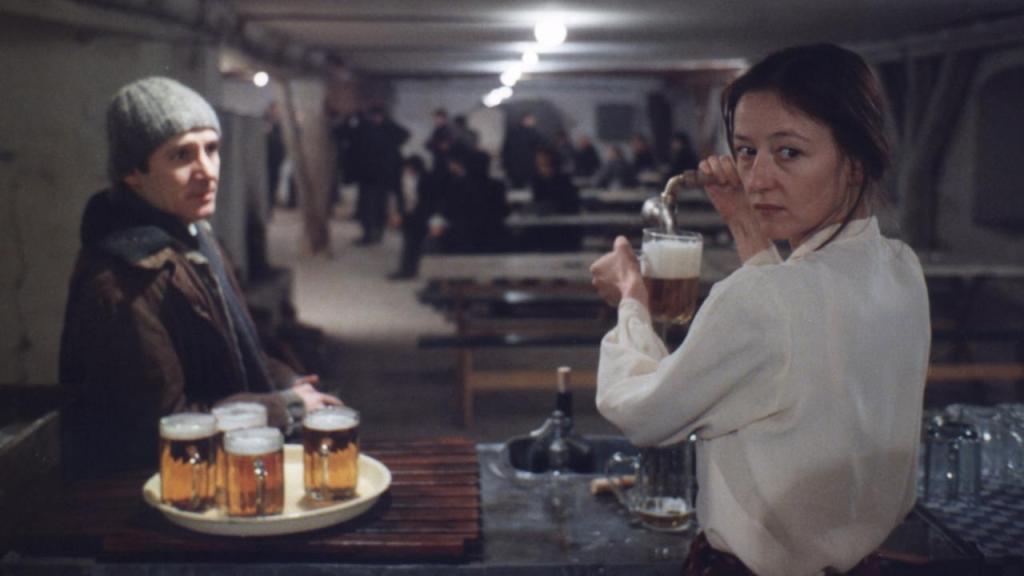
It’s both fascinating and illuminating to look at Haneke’s body of work in chronological order, since one can see him not only steadily becoming more confident as a storyteller but also, slowly but surely, developing a style and vision very much his own: a progress – ironically, given his own highly personal form of filmmaking – seemingly derived in no small degree from his admiration for several filmmakers, most notably Robert Bresson and Ingmar Bergman. By this, I am not only alluding to the famously ‘dark’ worldviews of those two likewise idiosyncratic auteurs, but to their pared-down narrative and visual styles, an increased focus on essentials which can also be found coming to the fore in Haneke’s work.
The stories of the TV films are all quite different and derive from different sources – two are originals by Haneke himself, the others adaptations of literary works by some of his favourite authors – yet even at this comparatively early stage of his career, one can discern the presence of a distinctive creative talent. Three Paths to the Lake (1976), from a novella by Ingeborg Bachmann, centres on an acclaimed middle-aged photojournalist returning to her provincial hometown to see her father; the visit stirs up memories, some painful. In contrast, Arcadia, the first part of the diptych Lemmings (1979) looks at the experiences of a group of young students at the end of the 1950s, though the second part, Injuries, is set around 20 years later, and explores the tensions blighting the relationships of those who survived into bourgeois middle-age. Variation (1983) charts the sudden break-up of two seemingly happy relationships when a man and a woman fall unexpectedly for one another. The Rebellion (1993), adapted from Joseph Roth, is a rare period-picture, chronicling the declining fortunes of an amputee veteran of World War One, while The Castle is a marvellously assured account of Kafka’s unfinished novel about a land surveyor thwarted by nightmarish bureaucracy.

A mixed bunch in terms of basic materials, the films nevertheless feel like the work of someone with a consistent vision of life’s vicissitudes. Oppressive social hierarchies, generational conflict, the difficulty of proper communication, sexual and emotional dissatisfaction, destructive hostility, loneliness, anxiety, guilt and recrimination, solitude and, occasionally, suicide recur in the films, but such is Haneke’s unsentimental but insightful understanding of his character’s social and psychological predicaments, and his expertise as a dramaturgist, that the films never make for grim viewing. I mentioned Bresson and Bergman earlier, but one is sometimes also reminded of Hitchcock, simply because Haneke’s firm grasp of how viewers respond to specific narrative tropes means that his work is for the most part suspenseful and absolutely compelling. Apart from anything else, Haneke really knows his craft: his films are packed with great performances, precise and highly expressive imagery, and brilliantly sustained scenes that are astonishing for their tonal and textural range and subtlety.
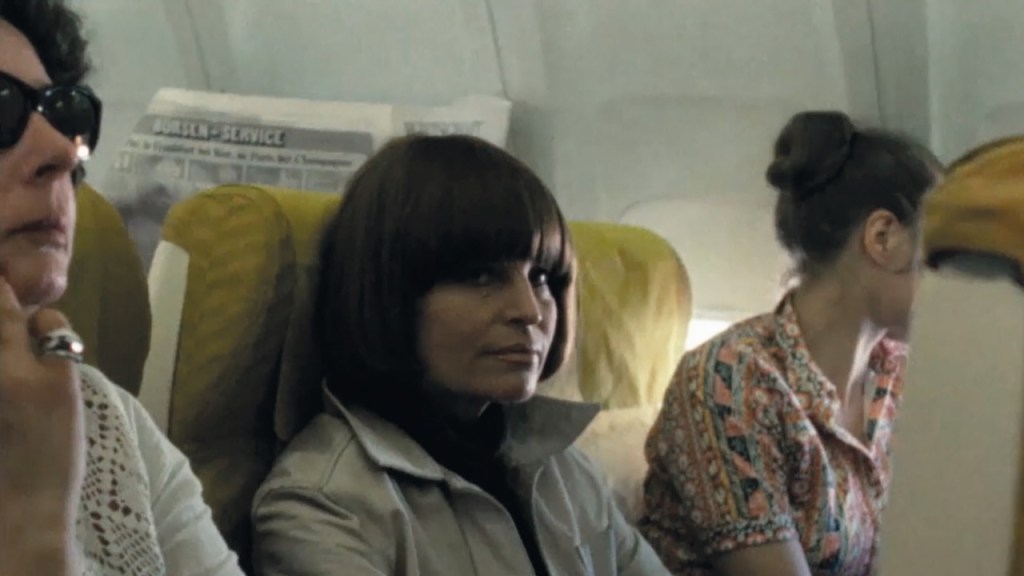
Moreover, anyone who persists in the once all-too-common misbegotten belief (widely discredited, one would hope, since the appearance of films like Time of the Wolf, The White Ribbon and Amour) that Haneke is a ‘cold’ filmmaker. more interested in finger-pointing and provocation than in making films about the pains and problems of living in a profoundly flawed world, should not only take another look at the films made after Funny Games but investigate the newly available television work. Some characters, it is true, behave badly, but everyone has their reasons (I suspect Haneke also admires Renoir), and very often we see that bad behaviour comes about primarily because people are confused or in pain or simply doing what they think is expected of them by society. There is tenderness here, and sympathy. There is modernism, even radicalism in Haneke’s work, but there’s also a great deal of classicism and humanism. That’s a rich mixture, and it really delivers. So he makes serious movies about serious subjects? Isn’t that what most of the best artists do?
Michael Haneke: A Curzon Collection is now available on BluRay. Photo of Haneke and Isabelle Huppert taken by the author at the 2017 Cannes Film Festival, where Happy End received its premiere.
 notes and observations by Geoff Andrew
An interesting critique of Haneke that makes me want to buy the new Curzon blu ray set, I’m especially interested in the TV that Haneke did before he became involved in making films so the collection should cover most of that. One question: is the TV series you mentioned about globalisation which Haneke has started writing but not made called Kelvin’s Book?
LikeLike