I have always failed to understand why the films of the Belgian brothers Jean-Pierre and Luc Dardenne have seldom attained the box-office success they’ve deserved in the UK. I had been totally knocked out by the first film of theirs I saw – La Promesse – when it played in the 1996 London Film Festival, so I made a point of encouraging critic friends to attend the unusually late Cannes press screening of their next film, Rosetta (1999). Those persuaded, of course, were grateful for my having drawn attention to the movie, not only because it was eye-openingly terrific but because it went on to win the Palme d’or. Since then, all their films – usually appearing at three-year intervals – have played in Cannes’ official competition, deservedly so and with excellent results: they won a second Palme d’or in 2005 with L’Enfant, and of their seven subsequent features only two – Two Days, One Night (2014) and The Unknown Girl (2017) – have not been awarded major Cannes prizes. (I suspect the Festival might have gently discouraged juries from awarding the brothers a third Palme d’or, since that would put them ahead of the other few directors who have also carried off the top prize twice.)
But somehow all the awards and all the very positive reviews have seldom brought in big audiences in the UK. Back in 2006, as programmer of the National Film Theatre, I mounted a retrospective of their work, including some of their early documentaries and a couple of rarely seen features, and persuaded the Dardennes to come to London for an on-stage career interview. Despite their recent second Palme d’or, advance booking was such that we ended up shifting the event from NFT1 to the smaller NFT2. I didn’t get the modest size of their audiences then, and I still don’t get it now. It’s not as if their films are long, slow, overblown or difficult. Indeed, they are short (generally around 90-100 minutes), pacy, credibly realistic and thoroughly accessible. True, they’re not escapist fare. Most of them deal with the kind of problems faced by those living on the margins of society, but they are never defeatist or depressing; indeed, their brisk narratives are urgent, suspenseful, emotionally affecting and persuasively authentic, free of sermonising or didactic theory, and free of simplistic notions of good and bad. Box-office should surely be boffo (as used to be said). This is social realism of the highest order, politically and ethically sophisticated rather than propagandist. In short, the Dardennes’ body of work includes some of the most honest, relevant and memorably humane films about life as we know it in western Europe today.
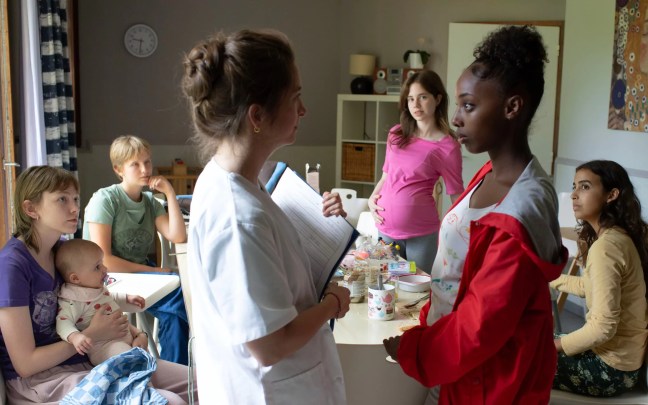
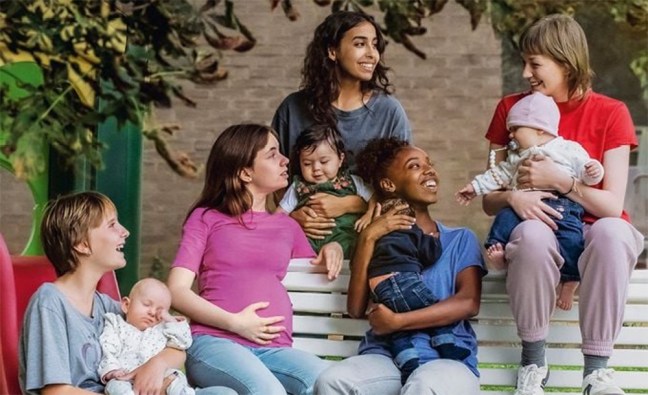
So I recommend you try to see their latest, Young Mothers (Jeunes Mères), which opens this weekend in the UK, and which is undoubtedly the best new film I’ve seen so far this year. (For the record, in Cannes it won the Best Screenplay award and the Prize of the Ecumenical Jury, but I imagine it was a pretty strong contender for the Palme d’or, which went to Jafar Panahi’s It Was Just an Accident.) Since I hate spoilers, I’m not going to go into plot details other than to say it deals with the experiences and emotions of a handful of young women, some of them teenagers, living in a state-run shelter for mothers-to-be or recent mothers in Liège; the interwoven storylines touch on all kinds of anxieties, disappointments, fears and hopes, and are brought vividly and very movingly to life by the extraordinarily fine performances of the young cast. If the focus on a larger number of characters rather than on the usual one or two is new for the Dardennes, there is no diminishing of attention to telling details, of nuance and insight, of compassionate understanding, or of carefully controlled emotional intensity. (I myself found the ending quietly sublime.) The film is characteristic of the Dardennes at their magnificent best, and I suggest you catch it while you can.
.
 notes and observations by Geoff Andrew