
If you have any interest at all in the extraordinary work of the Quay Brothers, you should certainly be sure to visit the exhibition Dormitorium – The Film Décors of The Quay Brothers, currently at Bloomsbury’s Swedenborg House until Friday 4 April. But even if you’ve never heard of the Pennsylvania-born, London-based, Central-and-Eastern-Europe-obsessed twins and their work in film (both stop-motion animation and live-action, short and full-length), stage design, calligraphy and the graphic arts – I treasure a book of the ‘Black Drawings’ they made in Philadelphia back in the mid-70s – should you find yourself in central London with 30 minutes or an hour to spare, you might head to the exhibition and give yourself a rare treat. (It’s free admission, too.) For once, those terms so often bandied about with scant care for accuracy or honesty – terms like ‘unique’, ‘original’ and the still more-abused ‘visionary’ – can be applied. It’s not only Christopher Nolan who rates the Quays so highly.
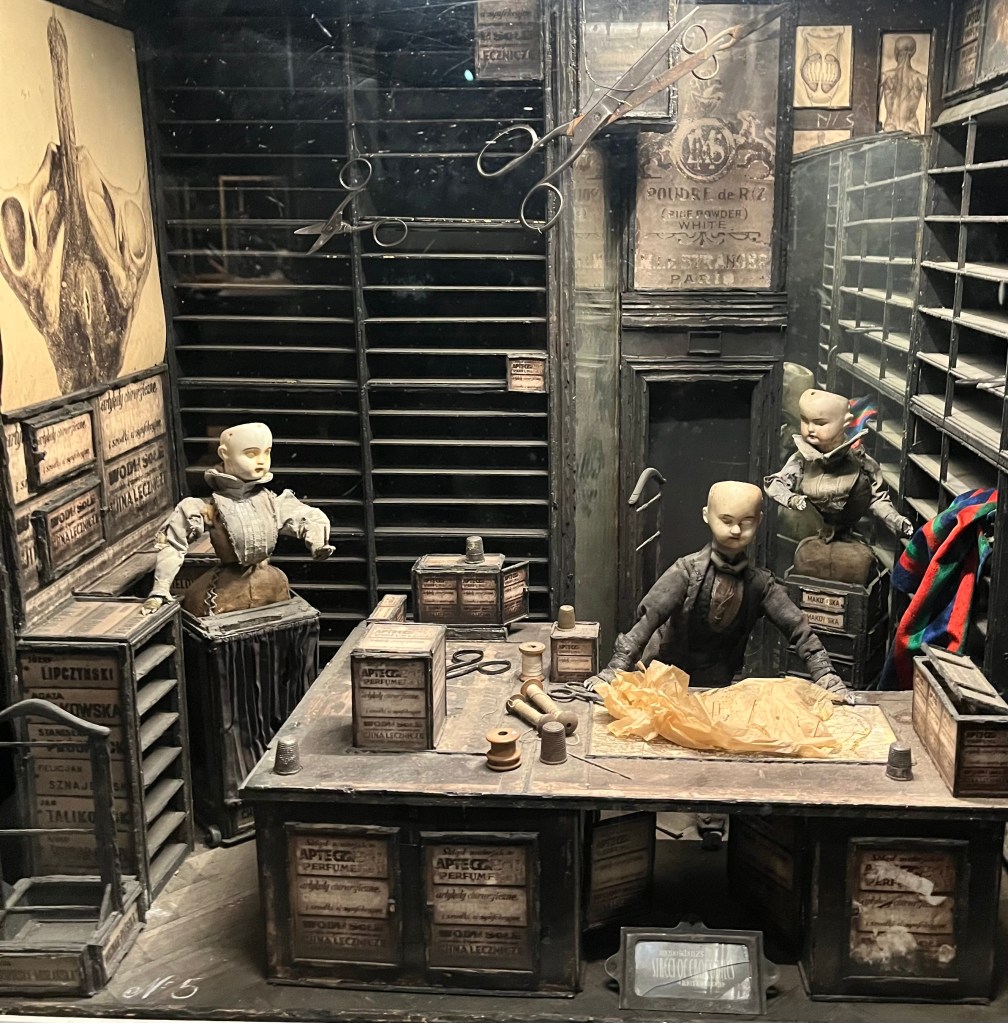
The exhibition comprises 23 glass cases containing puppets, models and sets made for films as early as The Cabinet of Jan Svankmajer (1984) and Street of Crocodiles (1986) and as recent as The Doll’s Breath (2019) and their extraordinary, long-awaited third feature Sanatorium Under the Sign of the Hourglass (2024, picture at top). Some of the vitrines have a magnifying-lens porthole, which not only distorts the view of the contents but provides an impression of motion.

But for all the stillness of the models – the fantastic, enigmatic tableaux of grotesque characters (some more or less human, some not at all, some impressively weird hybrids) are frozen in time, save for the occasional minimally fluttering feather or frond – such is the meticulous, almost absurdly detailed assemblage of the hand-crafted figures in their likewise painstakingly hand-crafted landscapes that one is overtaken by a strange sense of life not extinguished but temporarily put on pause. ‘Dormitorium’ is a word used for monastic dormitories, but also, going further back, to mean necropolis; and the darkened hall that houses the show serves to enhance the atmosphere of life and death coexisting simultaneously. (It’s perhaps no accident that Sanatorium…, adapted from the novel by Polish writer Bruno Schulz, centres on a young man visiting his father in a sanatorium, a father said to be dead but perhaps still alive in some mysterious way.)

If you’ve never seen a film by the Quays, the room also includes a looped compilation of moments from some of the movies made during their long and fruitful career, revealing their expertise with changes in light, shifts of focus and texture, movement, composition, and sound. (The twins, by the way, are hugely knowledgeable and curious about – and, I suspect, influenced by – music, especially classical, as well as literature.) But it’s the works in the glass cases that are the main reason to visit the exhibition. For all their dreamlike, often sinister strangeness, and their dark intimations of death, decay, destruction – the models, after all, have clearly been constructed partly from debris, organic and otherwise – these are undoubtedly works of art; the exquisite craftsmanship and astonishingly imaginative invention on view make for great beauty, however bizarre.
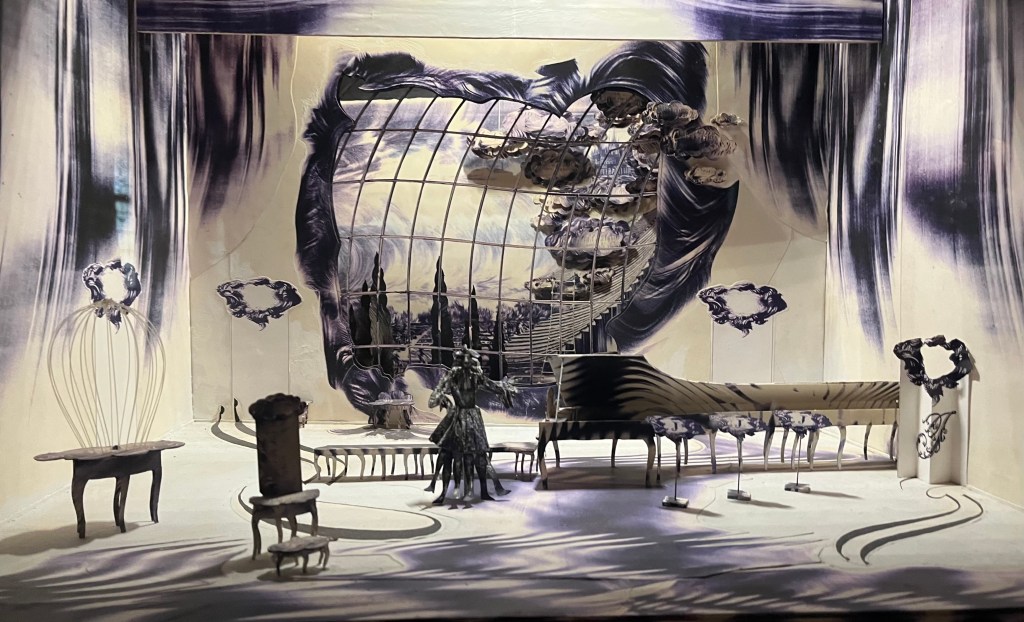
But also for great wit; I frequently found myself smiling at these wondrous creations. The Quays have an uncanny ability to bring together, into one coherent entity, elements, emotions, qualities and moods that would seem not only to be opposites – the stuff of tragedy and comedy, of life and death – but also, at the same time, utterly strange and vividly familiar. Like the greatest surrealists, they create impossible alien worlds we can immediately recognise as our own.
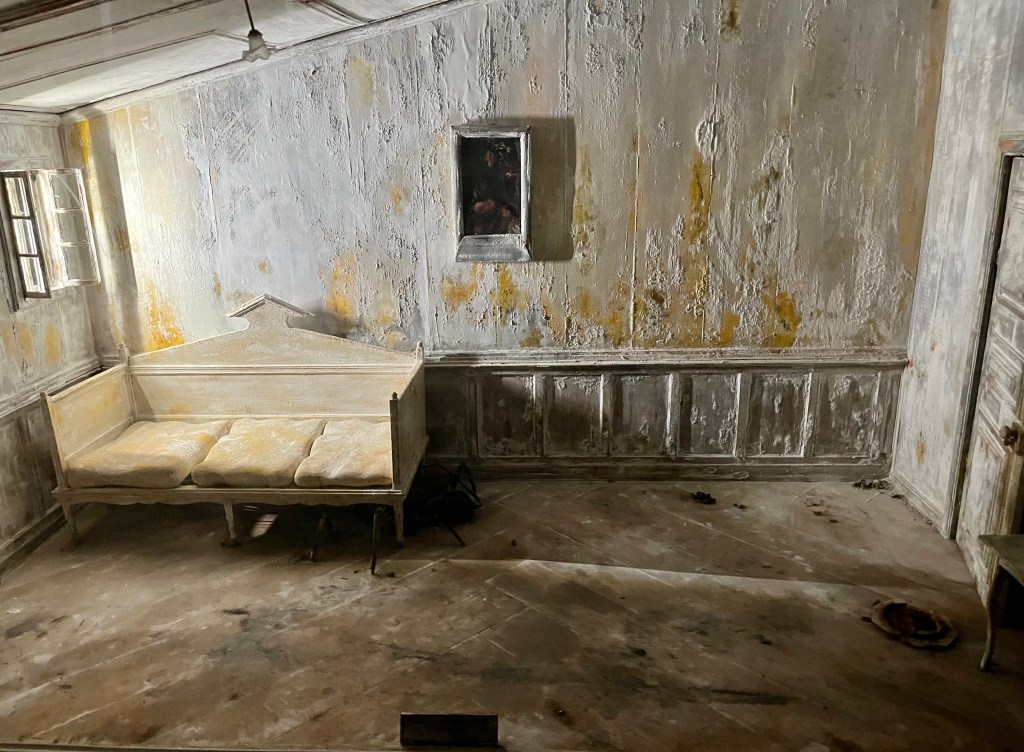
Dormitorium – The Film Décors of The Quay Brothers continues at Swedenborg House, 20-21 Bloomsbury Way, London WC1A 2TH until Friday 4 April, as part of the Kinoteka Film Festival. Open 10.00 to 5.00 Monday to Friday; Saturdays 12.00-5.00. ‘Inner Sanctums – Quay Brothers: The Collected Animated Films 1979 – 2013’ and the feature-length ‘Institute Benjamenta’ are available on BFI BluRay
 notes and observations by Geoff Andrew