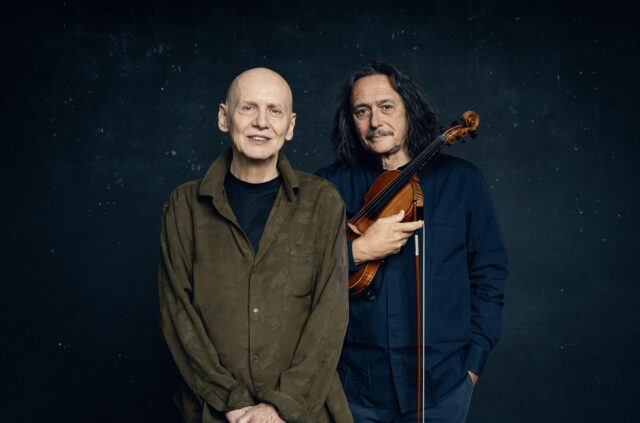
A few weeks ago, enthused by the release of an impressive album of duets by Thomas Strønen, I followed my review with a list of some of my favourite duet CDs released by ECM over the years. Perhaps one of the least known of the albums I included was Poros, a 1998 release by the French duo of pianist François Couturier and violinist Dominique Pifarély (pictured above). When I wrote that blog, I had no idea that Couturier and Pifarély were about to give us another collaboration… after a gap of more than a quarter-century. But Preludes and Songs, their first recorded encounter in all that time, is out now… and I’ve been listening to and greatly enjoying it on a daily basis.
Couturier is a pianist steeped in classical, contemporary and jazz, who has done wonderful work with Anouar Brahem and Anja Lechner, as well as a solo outing and some albums with his own quartet which reflect his abiding interest in the films of Andrei Tarkovsky. Pifarély has a similarly varied body of work to his name, having worked with the likes of John McLaughlin, Mike Westbrook and his own jazz quartet. Both musicians occupy that fascinating, sometimes highly rewarding non-generic space located somewhere between classical, jazz, experimental, folk and standards. I loved Poros, but the new album is perhaps a little more accessible in that it includes, alongside some original compositions by the violinist and pianist, a number of familiar classics.
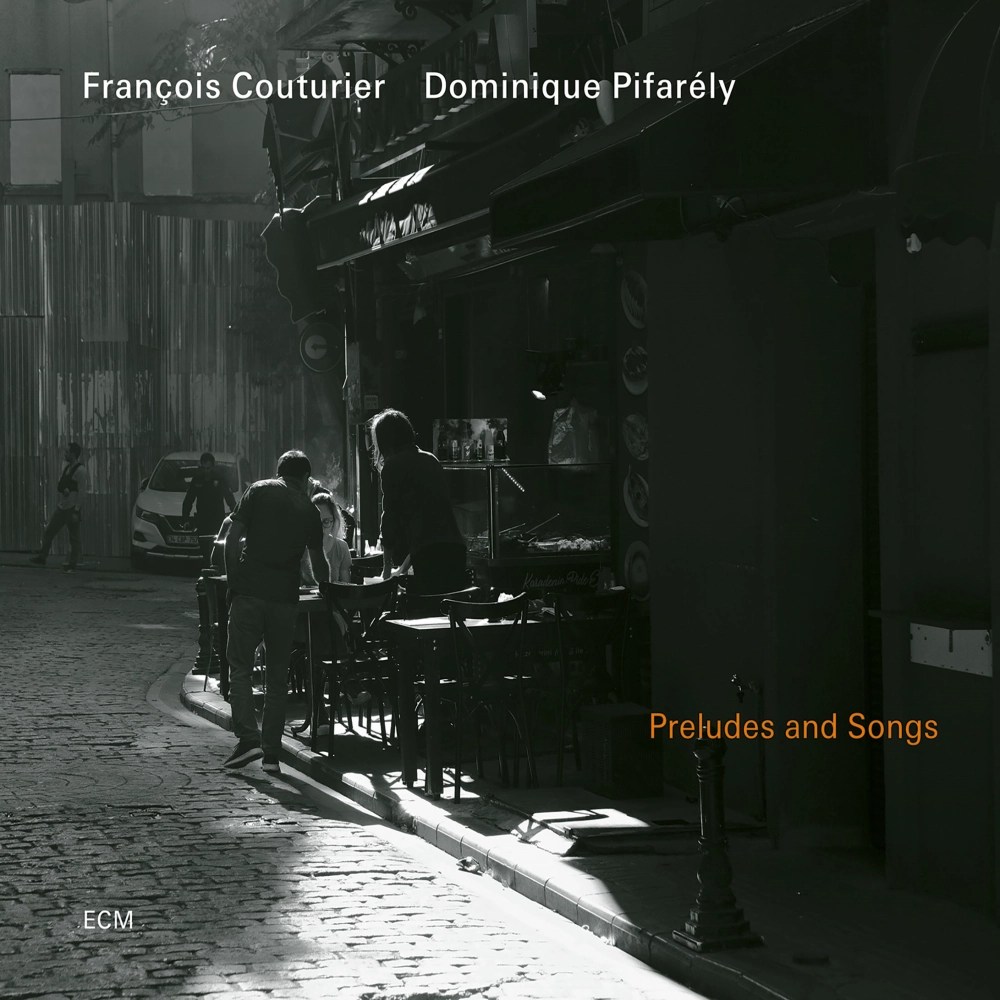
Preludes and Songs is rather more immediately engaging, then, than Poros (not to mention Pifarély’s 2015 solo album Time Before and Time After, which for all its virtues is perhaps a little too austere even for this admirer to play it frequently). It’s also, I’d venture, less ‘arty’ than Couturier’s Tarkovsky-inspired projects, which draw occasionally – and rewardingly – on music by the likes of Bach, Pergolesi, Vivaldi, Takemitsu and Schnittke. Nevertheless, the new album is again impressive for its refusal to adhere to convention. It does, as I said, include versions of a number of standards, but you often have to wait a minute or two until the main melody finally announces itself. No matter; the ‘preludes’, whether composed by the pianist or the violinist, are entrancing, and when the familiar tune does arrive, it somehow feels all the more welcome. (This delayed approach to a standard is far from new, of course – one of my all-time favourite examples is Ornette Coleman’s take on Embraceable You, recorded in 1960 – but even now it can still feel remarkably fresh.) Pifarély’s violin is unusually free of vibrato, which can make for a beautifully unsentimental but poignant effect; likewise, when Couturier leans towards lyricism, he is mercifully averse to florid rhetoric. The choice of standards to accompany their own compositions is imaginatively varied and fruitful: Brel’s La chanson des vieux amants, Manning Sherwin’s A Nightingale Sang in Berkeley Square, JJ Johnson’s Lament, Ellington’s Solitude, Gershwin’s I Loves You Porgy. The account of the Brel song – a favourite of mine since I heard Judy Collins’ marvellous version on Wildflowers half a century ago – exemplifies everything I admire and enjoy about the pair’s album.
You can hear more from Couturier and Pifarély by visiting YouTube and the ECM website; there’s a trailer here. You may find their distinctive blend of composed music and improvisation a little too cool or abstract. I seem to remember that I did when I first heard them, but not now; not at all. A little patience can reap rewards…
The photograph of Couturier and Pifarély is by Jean-Baptiste Millot, courtesy Millot and ECM.
 notes and observations by Geoff Andrew