
Not so long ago, I wrote in appreciation of the lovely new album by Nils Økland and Sigbjørn Apeland. It wasn’t the first time I’ve enthused about Nordic music and, as I’m about to prove, it wasn’t the last. There’s something special about the way many musicians from the Nordic countries blend folk, jazz, formally experimental music and other genres into a fresh, distinctive, coherent whole. Such is the case with two new releases by stalwarts of the Scandinavian music scene, the Norwegians Sinnika Langeland and Frode Haltli.
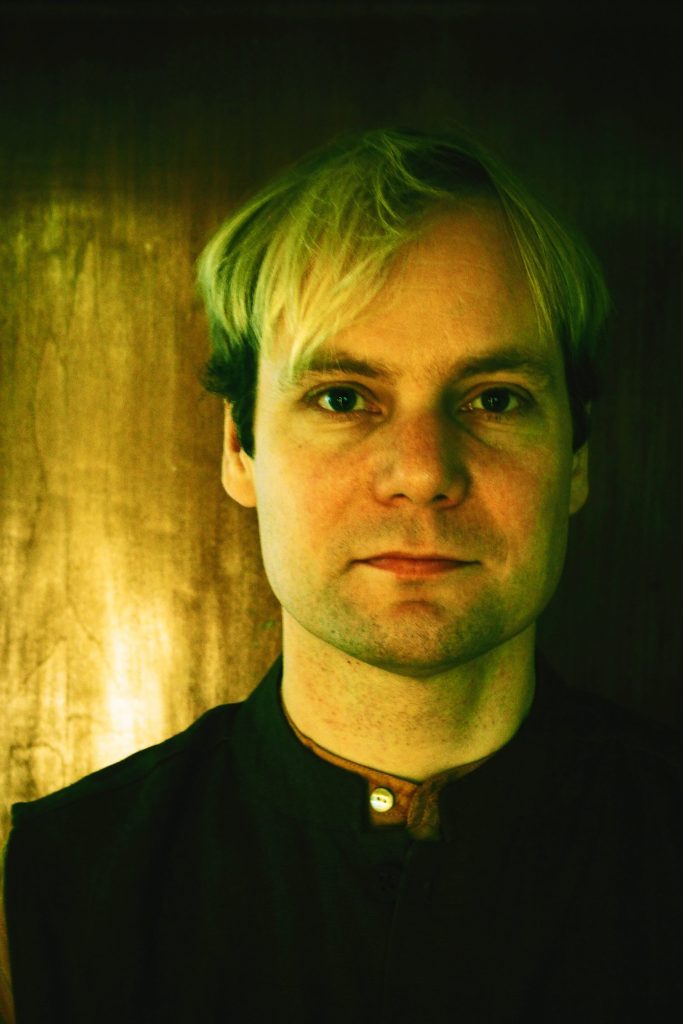
Let’s start with Haltli, not because he’s a favourite musician of mine (though he did feature, quite incidentally, in the very first piece I wrote for this site) but simply because his latest single was released before Langeland’s album. A virtuoso accordionist seemingly able to get just about any sound he likes out of his instrument, Haltli has recorded wonderful albums in a wide array of genres (including ‘contemporary classical’ by the estimable likes of Hans Abrahamsen, Bent Sørensen, Arne Nordheim, Magnus Lindberg and Salvatore Sciarrino*). Trippar – a single serving as a taster for the newly released album Avant Folk Triptyk – derives from a project that began around half a decade ago: Avant Folk and Avant Folk II were released on the Hubro label in 2018 and 2021. (The band assembled for these albums also put out two singles – St. Morten and Quarantine Quilt – recorded under restricted conditions at the height of the Covid pandemic.) Trippar is a delight, characteristic of much of Haltli’s reworking of traditional modes (or, as he has said, ‘the outskirts of folk’) in its capacity repeatedly to surprise; while it is utterly accessible – melodic and danceably rhythmic – from the beginning it’s clear that Haltli and the ensemble (guitars, fiddles, horns, bass, Hammond organ, percussion and vocals alongside the accordion) are not only technically well equipped but temperamentally perfectly happy to keep the music in a healthy state of inventive flux. There are a couple of changes in tempo that are simply exhilarating; you can see/hear it here.
The rest of the album is equally rewarding, varied and difficult to categorise (not least the miniatures Vorspiel and Zwischenspiel, highlighting Haltli as soloist). Triptyk, for example, eventually turns into something resembling (immaculately played) classic guitar rock, but prior to that there’s a lovely slow lyrical improvisation by the accordion, bass and drums. Conversely, with its squalling horns the upbeat opening of Prillar might have one reaching for terms like post-bop, but then we reach a becalmed interlude suggestive of a vast static dreamscape which gradually reveals itself to be pulsating with strange life. The restless invention is constantly engaging and never feels contrived, since Haltli’s approach to composition is fundamentally organic: the changing motifs and moods relate to one another quite naturally. The closing Du, mi tid is a good example, shifting slowly but surely from tentative but scintillating ruminations on the accordion, through spacy ensemble interplay, to hints of a sparse, soaring melody that eventually sounds like time coming to a standstill. It’s a fitting ending to a fine album. (And while we’re on the subject, here’s a track from Haltli’s Passing Images, long a favourite disc to which I very frequently return.)
I first encountered Haltli’s superb work as an accordionist on Sangam, a 2004 album by saxophonist-composer Trygve Seim which featured many top Scandinavian musicians including trumpeter extraordinaire Arve Henriksen and percussionist Per Oddvar Johansen (who plays on Avant Folk Triptyk). Haltli and Seim have performed together a great deal. (Their beautiful album of duets, Yeraz, includes a memorably fine account of Bob Marley’s Redemption Song.) Like Haltli, the saxophonist has collaborated widely, and is a regular participant on Sinikka Langeland’s albums, including her latest Wind and Sun. A singer-composer who sets poems both traditional and modern, Langeland plays a 39-string concert version of the kantele, a traditional Finnish-Karelian instrument which when plucked has a distinctively delicate, sparkly sound. Her songs are clearly influenced by traditional folk music, yet she also readily mixes jazz into the blend; albums of hers which I especially like – Starflowers (2007) and The Land That Is Not (2011) – had Seim, Henriksen, bassist Anders Jormin and drummer Markku Ounaskari on board, all notable leaders and composers in their own right.
Langeland’s new Wind and Sun continues in that vein, with Seim still there, and the trumpet, bass and percussion being taken over by Mathias Eick, Mats Eilertsen and Thomas Strønen – again all dependably fine players, leaders and composers. The evocative settings this time are of acclaimed Norwegian poet and novelist Jon Fosse – who has just won the Nobel Prize – but what attracts me most is the music, which enhances the words but is also deeply satisfying in itself. Langeland’s singing – limpid, unadorned, forthright – and her likewise unfussy playing of the kantele is complemented marvellously by the instrumentation, whether written or improvised; there is first-rate playing here by all involved. Seim and Eick, unsurprisingly given their instruments, are perhaps the most immediately noticeable. Seim’s sax soars and slides on the instrumental Wind and Sun, while offering a more meditative tenderness on A Child Who Exists. Eick’s trumpet, meanwhile, ends Window Tells – one of several songs suggestive of journeys on foot or by boat – with a wonderfully bright, warm, airy coda.
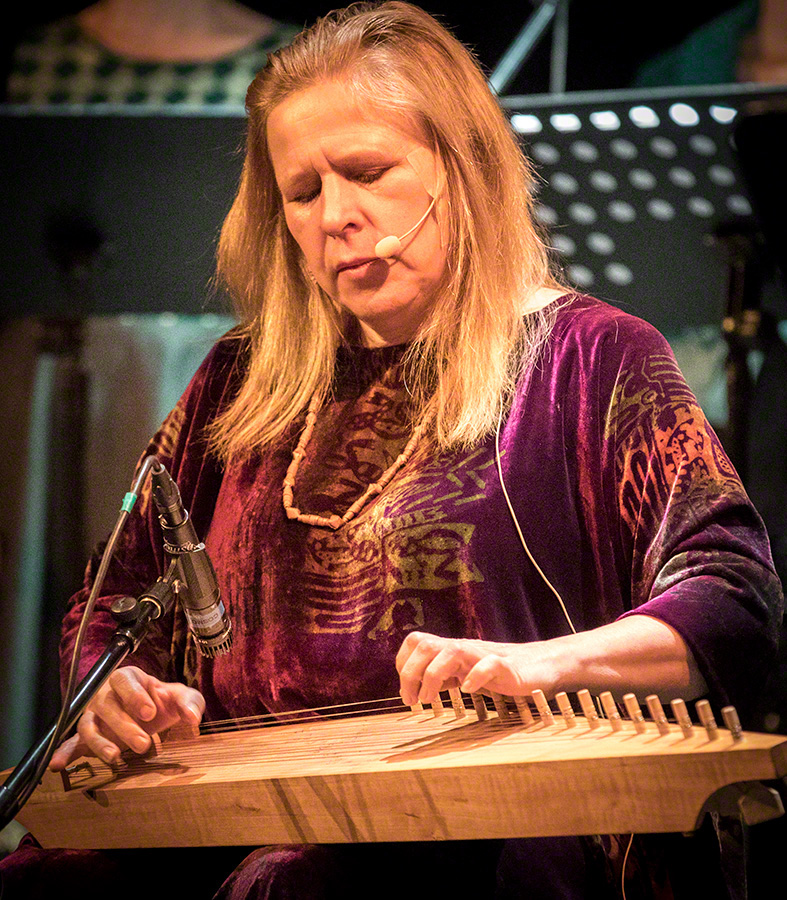
That said, Eilertsen and Strønen are also terrific, the subtlety of their work on bowed bass and drums at the start of Window Tells a case in point. But as in Langeland’s earlier albums, it’s the sound of the composite whole that counts: transparent yet firmly grounded, lyrical, hymnal or occasionally (as on the mid-tempo shuffle The Love or the funkily upbeat instrumental Wind Song) dance-like; sometimes silky, sometimes spiky, always muscular, always harmonious. You can try another track, When the Heart Is a Moon, here. The more I’ve been listening to Wind and Sun, the more I’ve felt that the album is not quite like anything by anyone else. The same, of course, can be said of Haltli’s latest Avant Folk release. They are different, daring and distinctive. In both instances, these days, that’s surely cause for celebration.
Frode Haltli’s Avant Folk Triptyk and the single Trippar are released by Jazzland recordings Norway and are available on/from Bandcamp.Sinikka Langeland’s Wind and Sun is released by ECM. The photograph of the Avant Folk band in concert is by Olav Aga, the portrait of Frode Haltli by Knut Bry, and the photograph of Sinikka Langeland by Tore Saetre – pictures used with thanks to the photographers.
*Should you wish to venture beyond Haltli’s explorations of ‘the outskirts of folk’ and investigate his work in the ‘new music’ field, a good starting-point would be Air, the 2016 ECM album on which, together with the Arditti Quartet and the Trondheim Soloists, he recorded pieces by Abrahamsen and Sørensen.
 notes and observations by Geoff Andrew