
Back in the late 1990s, at the London Film Festival, I dimly recall having seen – and been both befuddled and beguiled by – a long, slow, monochrome film of The Postman Always Rings Twice. György Fehér’s Passion (Szenvedély) was considerably artier and more enigmatic than any of the earlier versions of James M Cain’s novel made by Luchino Visconti (as Ossessione), Tay Garnett and Bob Rafelson, and I wasn’t really prepared for its measured pace, stylised performances or grubby cinematography. Had I encountered it later, of course, after discovering the films of Béla Tarr (who had co-written Fehér’s film), I would probably have had a better grasp of where the film was coming from, since Passion, like Tarr’s own later films, is part of a Hungarian tradition which can be traced back in part to the work of the great Miklós Jancsó; at the same time, like Tarr’s movies, it takes certain aspects of the Jancsó aesthetic and pushes them to extremes.
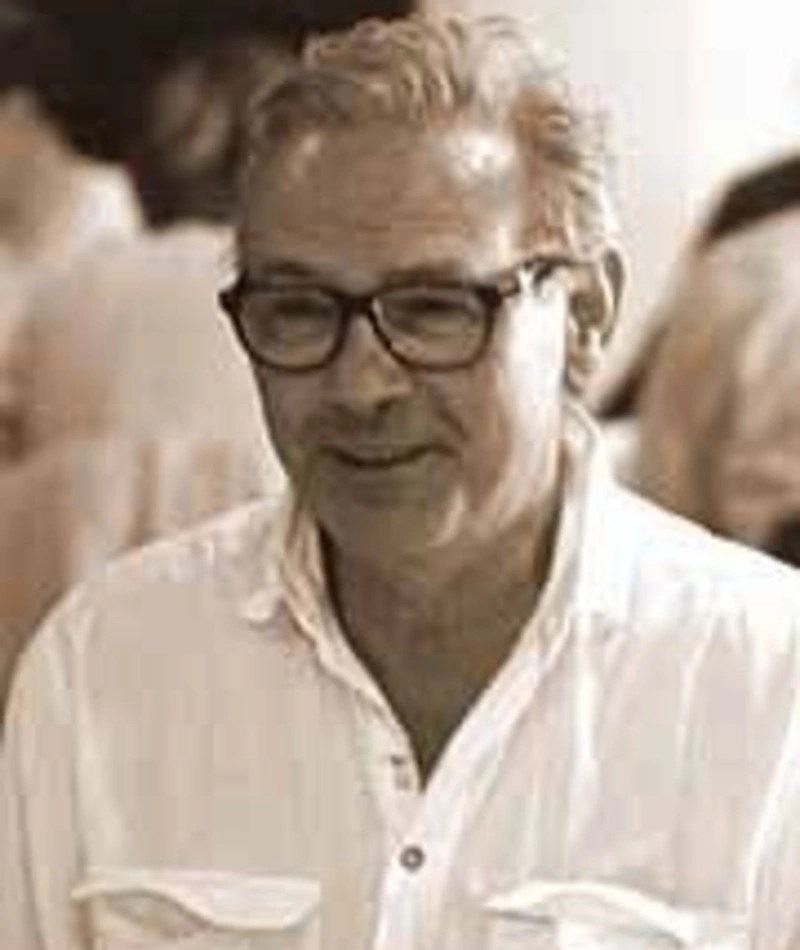
All this is by way of introduction to the recent 4K restoration and BluRay release of Twilight (Szürkület), Fehér’s only other feature, made in 1990. I first heard about the movie a couple of months ago when my critic friend Jonathan Romney mentioned having seen it at a screening; just a couple of weeks later I was having lunch with the Quay Brothers – connoisseurs of all things Eastern and Central European – and they too, long-term admirers, began enthusing about it. I was duly intrigued, and made it my business to see the movie, especially because Tarr (some of whose work I admire enormously) had been a consultant on it, and Fehér had been one of the producers of Tarr’s acclaimed Sátántango. Indeed, some of what I’d been told suggested that Twilight was very like a Tarr movie.
And so it is, in many ways, except that the lengthy opening aerial shot, looking down on a forested landscape seemingly devoid of human habitation, reminded me of another director: Werner Herzog. That’s partly because of the music heard at that moment and then again so often throughout Fehér’s film: an extended two-note drone by Popol Vuh, and Zinzkaro, a Georgian folk hymn, both heard to fine affect in the German’s Nosferatu the Vampyre. There’s also a snippet from the overture to Bartók’s Bluebeard’s Castle, which is perhaps fitting given that the story – adapted from Friedrich Dürrenmatt’s The Pledge: Requiem for the Detective Novel * – concerns the investigation into the murder of an eight-year-old girl. (There have been several other films made from the Swiss writer’s book, most famously The Pledge, directed by Sean Penn in 2001 with Jack Nicholson heading a very starry cast; rest assured, Fehér’s version could not be more different.)
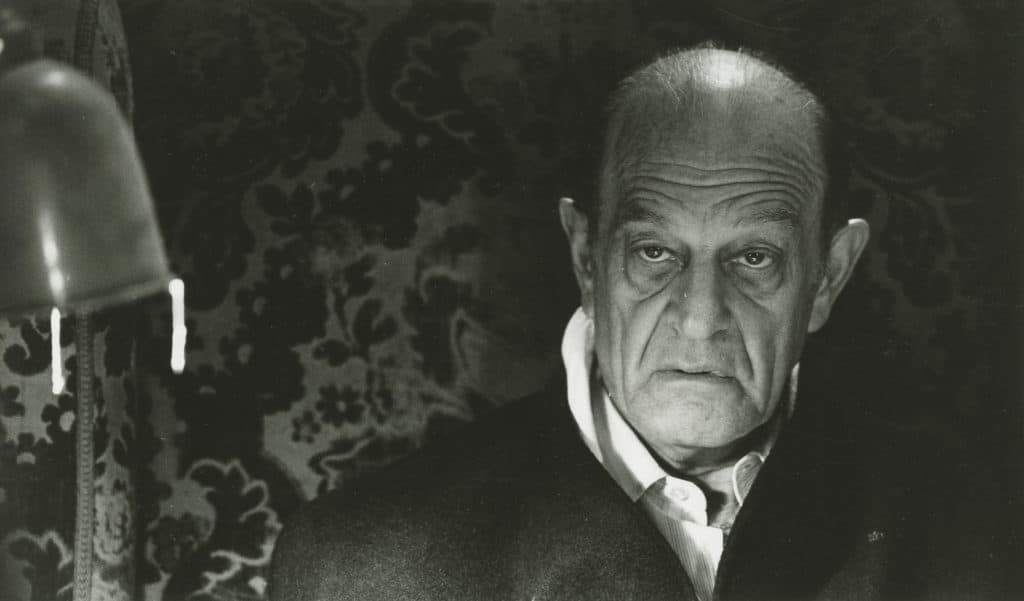
I’m rambling a little here, since there are so many fascinating and unexpected links to Twilight; let’s get back to the film itself. It’s never made entirely clear precisely when or where the story is set, but it (sort of) follows the aforementioned murder investigations carried out by two detectives, one an inspector (played by Péter Haumann) reluctant simply to yield to the widespread suspicion that a travelling salesman is the culprit, the other a retired colleague with unorthodox methods of his own. So far, so straightforward… save that Fehér’s somewhat tangential approach to narrative hardly makes even that much clear. The second detective is barely seen for much of the film, while many of the mostly silent protagonist’s actions are never fully explained. What we get are long scenes made up of long takes, often with little or no dialogue, punctuated by enigmatic ellipses. There are, it’s true, a couple of sequences more dependent on words, though one of them centred on ‘a psychiatrist’ played by István Lénárt (pictured above, whose craggily mournful face may be familiar from Tarr’s The Man from London) is taken at such a snail’s pace in terms of dialogue delivery that it teeters on the brink of risibility.
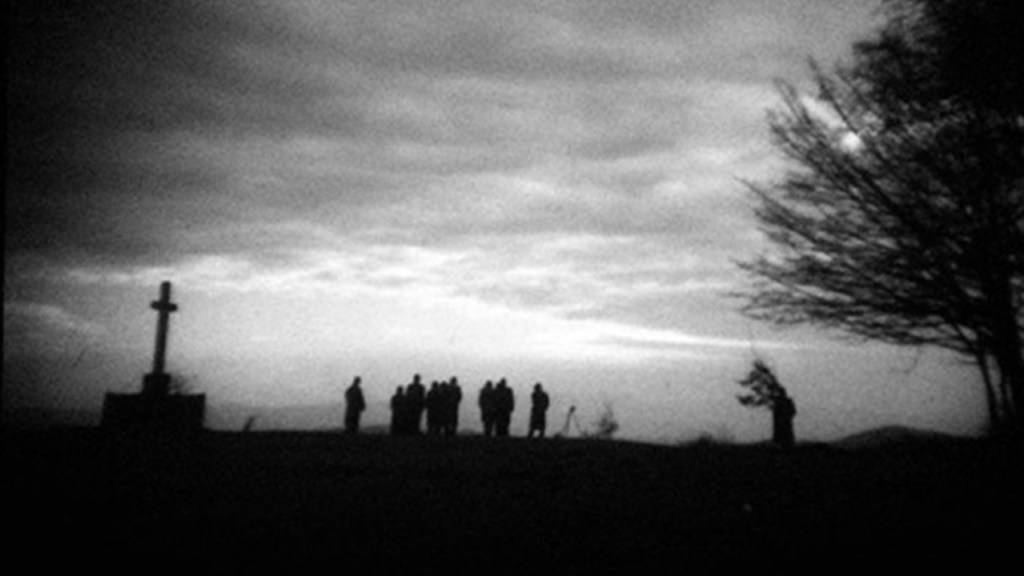
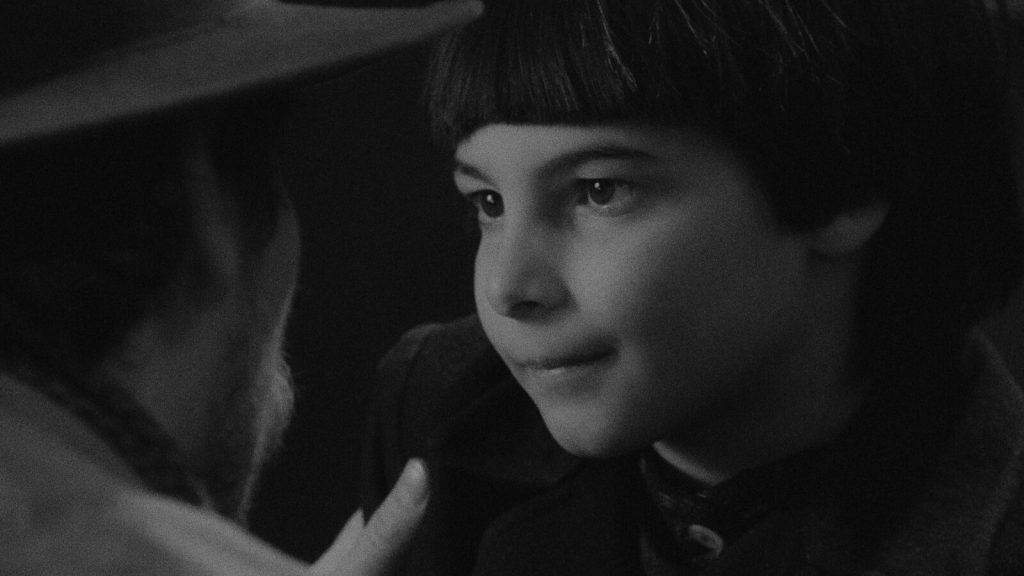
That could be said of certain other sequences, with their pregnant pauses and meaningful stares. (How on earth could one reviewer refer to ‘naturalistic acting’? That said, some accounts of the plot appear to get the detectives mixed up, even going so far as to suggest there is only one. This is evidently not the easiest film to write about.) Nevertheless, somehow, for all its obscurities and eccentricities, Twilight remains strangely engrossing, as challenging and as rewarding as Tarr’s work or a Herzog movie like Heart of Glass. The rewards have much to do with the film’s striking imagery, with credit due to cinematographer Miklós Gurbán. But one should also mention the evocative sound design (Láslo Vidovsky), two extraordinary scenes featuring facial close-ups of young girls being interviewed for possible insights into the killer’s identity, and Fehér’s overall control of an atmosphere of almost apocalyptic foreboding; the mood is sustained partly by the imaginative positioning of actors, as in a mountain shot reminiscent of a Fordian funeral or in a gallery of silent locals, standing almost like zombies, as they await an opportunity for vengeance, and partly by the use of the desolate wintry landscape (though an unexpected cuckoo’s call perhaps undermines any suggestion that winter might even be eternal in this particular backwater of humanity).
Is it a political allegory, a philosophical fable, a critique of conventional crime dramas, or what? Who knows? Undoubtedly, Twilight will not be for everyone. But if you like your art movies grim, gloomy, mysterious, moody, bizarre and not a little beautiful, you might consider checking out Fehér’s engagingly different film. And if you feel you need a bit of clarification at the end, the extras include an illuminating interview with the Brothers Quay to help you out. Meanwhile. here’s a clip below (sadly without subtitles), or you can find a trailer on YouTube.
* Since writing this piece, I have read the Dürrenmatt novel, and while the film is essentially true in many respects to the book’s narrative premise and philosophical thrust, Fehér also departs from the original in a great many details, not least in attributing the actions of one of the detectives to the other, and vice versa. If you enjoyed but were mystified by aspects of Twilight, I certainly recommend the novel, a short, concise book which probably takes little more time to read than is required to watch Fehér’s not exactly concise film.
Twilight (Szürkület) is released on BluRay by Second Run.
 notes and observations by Geoff Andrew