Regular readers will probably be aware of my high regard for the ECM label – its disdain for the limitations of musical borders, the roster of musicians, the pellucid sound, the readiness to release programmes many other companies would never consider – but one thing I haven’t really addressed is how often ECM albums boast unusual instrumental line-ups. I did, last year, point to the fact that Anouar Brahem’s After the Last Sky featured four string instruments seldom found playing together, and offered a piece on duo recordings, some unconventional. Still, despite it being an intriguing aspect of ECM’s catalogue, I haven’t dealt with it in any detail, probably because it isn’t actually that important; good music is good music, after all, however the sounds are produced.
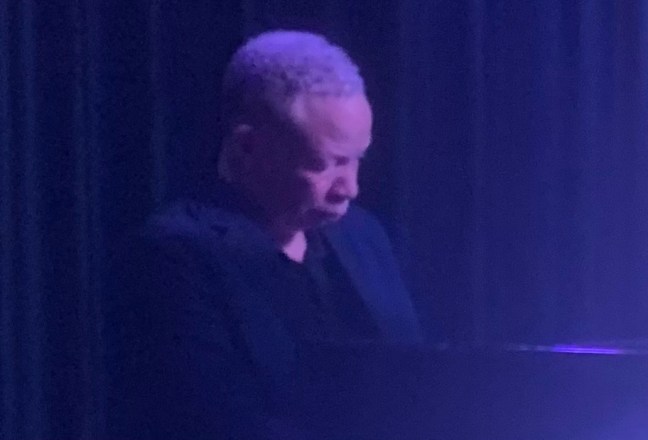
That said, instrumental and orchestral colour can often be a significant part of music’s appeal, and I’ve been thinking about instrumentation a lot while listening repeatedly to two recent albums: Off Stillness, by Thomas Strønen’s band Time Is A Blind Guide, released back in December, and Dream Archives, from a trio led by Craig Taborn (pictured top, about whom I’ve enthused frequently), released in January. I’ve been unusually slow in getting around to writing about them, mainly because I’ve been caught up with other stuff, but also partly because both albums are so subtle that it takes a while to come properly to grips with them.
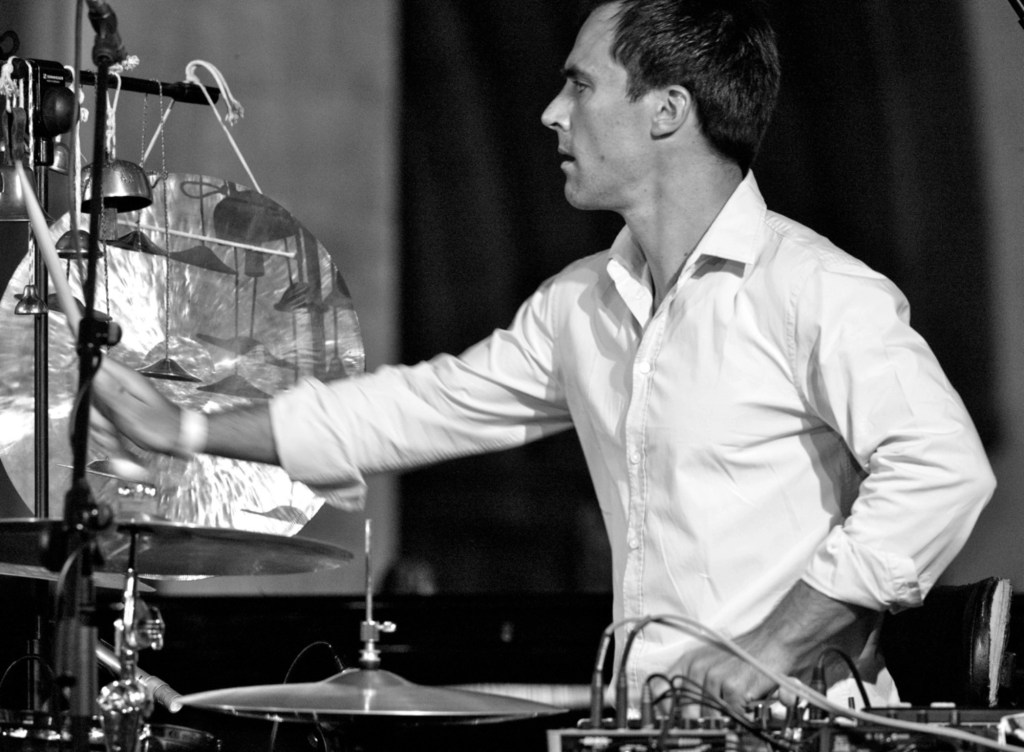
Strønen – whose work I first encountered in a number of albums by Food, a shape-shifting ensemble the Norwegian drummer co-founded with saxophonist Iain Ballamy – is not only a superb percussionist but a highly imaginative composer, and the six numbers on Off Stillness are all his own. Time Is A Blind Guide sets his drums alongside four stringed instruments – violin (Håkon Aase), cello (Leo Svensson Sander), double bass (Ole Morten Vågan) and piano (Ayumi Tanaka, who can be found playing inside the instrument as well as on the keyboard).
Off Stillness begins very promisingly with the delicate, gently rhapsodic Memories of Paul – the inspirations in question being the Pauls Bley and Motian (what’s not to like?), to whom this is a fittingly lovely tribute – which more or less sets the mood for the album’s first half. Season starts off with a crisply rhythmic saunter before settling into a faintly Eastern-sounding melody; Fall’s mournful lament mixes the strings’ echoes of early polyphonic music with the piano’s more romantic musings, before slowly evaporating into silence; Tuesday, perhaps the closest the album comes to a conventional tune, impresses for the leader’s supremely subtle percussion and tentative lyricism. Thereafter things become… well, more brazenly percussive. The suitably jagged fragments of Cubism take us into funkier territory; Dismissed proceeds from skittering solo drums through shrieking strings and hammering piano into a wild ensemble that punches well above its weight to sound like a far larger, louder band, all Ligeti-like pizzicatos, thumping chords and thunderous rolls. Then, in glorious conclusion, In Awe of Stillness builds from faltering hints of a tune, takes a while to find a rhythm that might take things forward, then slips almost imperceptibly into a pleasingly jittery groove, the violin soaring above before the music fades gracefully away.
One of the incidental pleasures of Off Stillness is that you’re sometimes left wondering which of the instruments produced particular sounds. The same can be said, here and there, of Taborn’s Dream Archives on which the keyboardist is joined by cellist Tomeka Reid and percussionist Ches Smith. While Taborn and Smith both contribute electronics, that’s not quite what I’m taking about here; rather, it’s about colour, texture… and space. So in the opening Coordinates for the Absent, a simple four-note motif is explored, upended, transformed and expanded in all sorts of ways; it feels at the same time very open and very focused, abstract yet strangely evocative. With Taborn, it’s sometimes hard to tell what’s written and what’s improvised: initially the second track, Feeding Maps to the Fire, may provoke such confusion, yet close listening reveals it’s a theme and faintly crazed variations – until it turns into one of the pianist’s characteristically complex, polyrhythmic riffs. This in turn paves the way for a delicious couple of covers: Geri Alllen’s When Kabuya Dances (the closer on Taborn’s 2019 collaboration with Vijay Iyer, The Transitory Poems), and Paul Motian’s Mumbo Jumbo; besides paying homage to two of Taborn’s favourite musicians, they reveal his expertise in and enthusiasm for whatever mood – the first forthright and ebullient, the second angular and contemplative – jazz may conjure up.
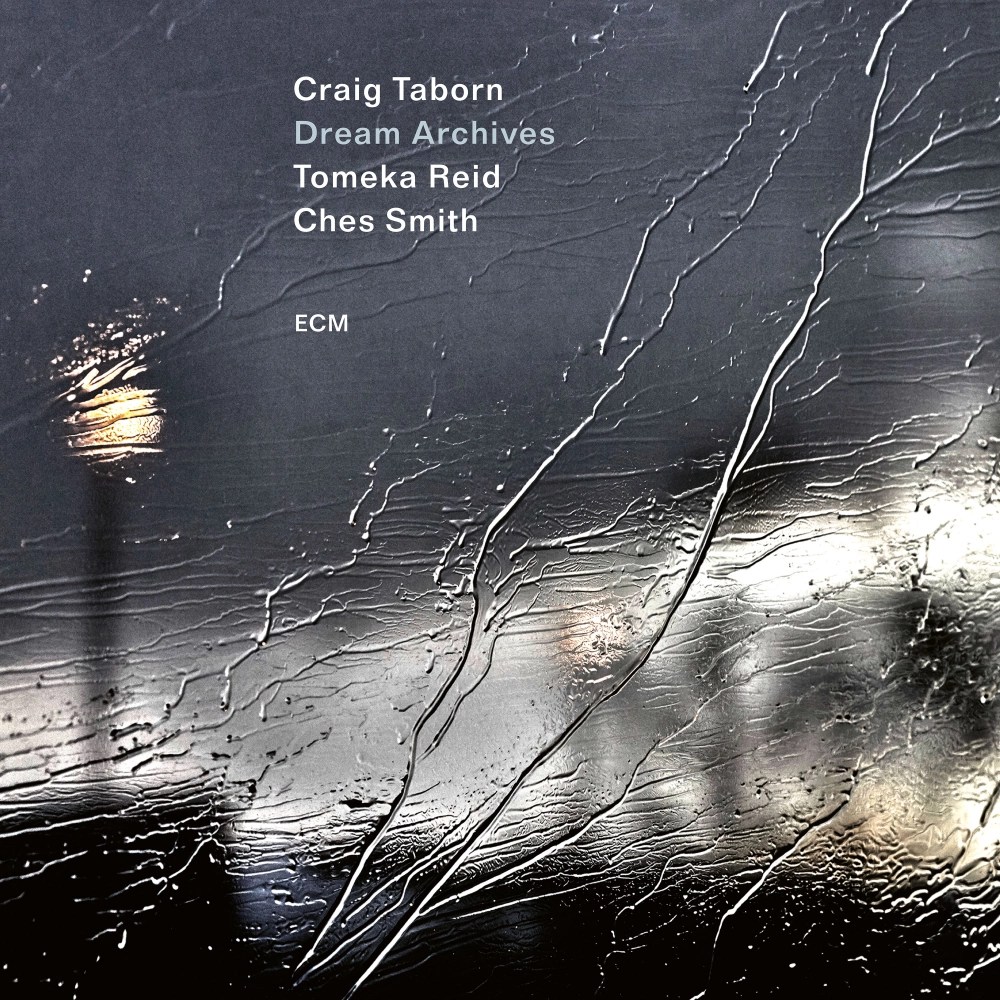
The subsequent title track, at an epic 12 minutes, is a case in point: it starts off sounding not altogether unlike something from the Second Viennese School (brief enigmatic phrases, oblique intervals), shifts into a seemingly free-form, partly electronic nocturne, spirals off into a playfully percussive collective improvisation which, as if by sleight of hand, you suddenly find has turned into another of Taborn’s compelling virtuoso-funk grooves. Then, to close, Enchant, an extended, celestially beautiful enlargement of In Chant, first heard on the pianist’s 2013 trio album with Thomas Morgan and Gerald Cleaver. This new account, while notably more experimental than that earlier version, demonstrates that he has remained utterly true to his distinctive musical vision – and that he still understands the importance of sympathetic and expert collaborators. Like Morgan and Cleaver, Reid and Smith do his art ample justice.
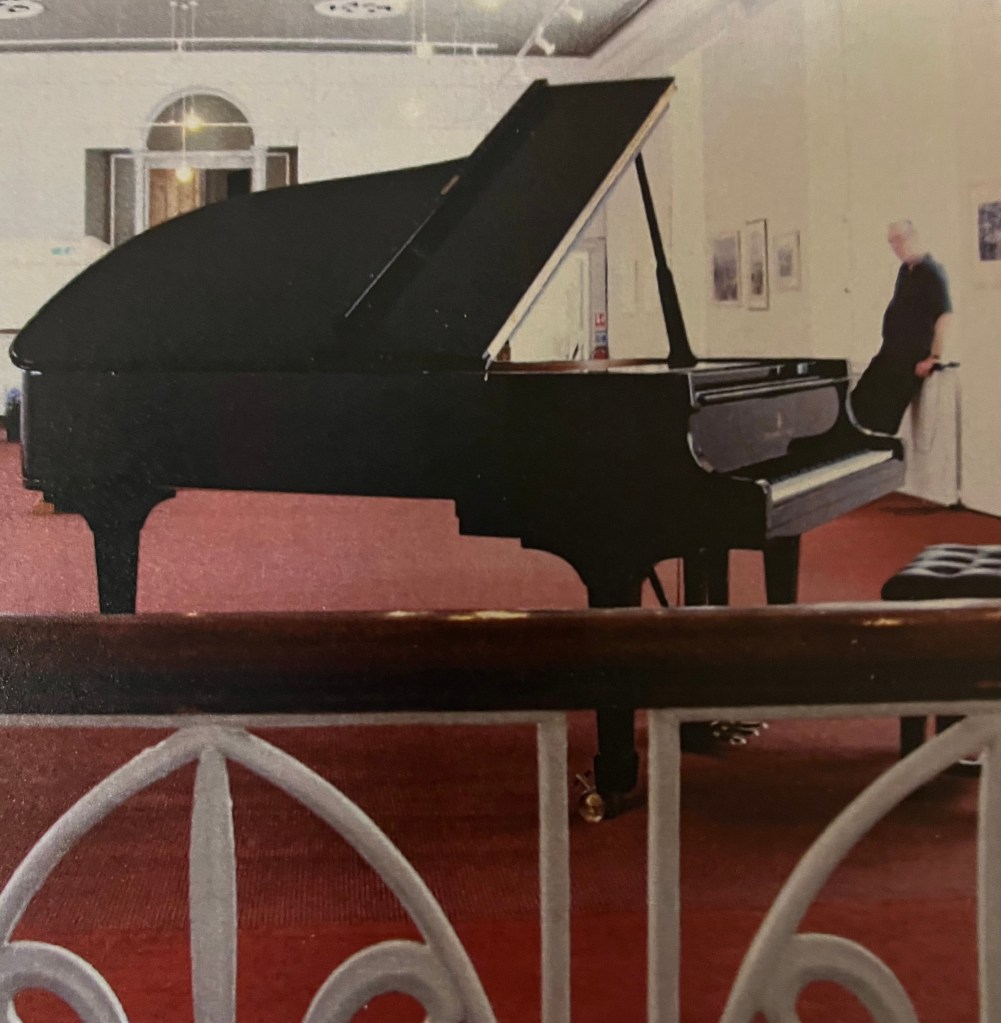
Off Stillness and Dream Archives are terrific albums: ambitious, audacious, and difficult to categorise, but highly rewarding if you’re prepared to put in a little time to discover their many virtues. I wholeheartedly recommend both. But of course, wonderful music can also be made more simply, on a single instrument, especially if that instrument is as colourfully expressive as the piano. So finally, a third, brief recommendation now for something (almost*) completely different: The Piano in the Room and the Blues by Mike Westbrook. It’s a recording of a solo recital the great composer, bandleader and pianist made back in 2006, in the Falmouth Arts Centre in Cornwall, where his wife Kate had an exhibition. The schema is very simple: four variations on an eight-bar blues inspired by a Jimmy Yancey number, two variations each on a 12-bar blues, a 16-bar blues and a 48-bar blues (the last two inspired by Bessie Smith numbers), and one brief sign-off that is labelled a ‘no-bar blues’. It’s supremely no-fuss, unpretentious stuff (you can even hear, for a few seconds, footsteps of someone walking past the room at one point), but the sound is lovely, the range – in tempo, harmony, mood, emotion – considerable, and Westbrook reveals, without a dash of flash or redundant rhetoric, just how much can be done with a single piano and the traditional blues format. Any ‘limitations’ just don’t seem to be there. Full of riches, the album is a small gem. (Upon hearing only the first few bars, my wife at once felt moved to ask what we were listening to, such was the music’s immediacy.) You can listen to some excerpts here, or see Westbrook play something not on the album here.
(* I say ‘almost’ because Strønen, Taborn and Westbrook are all very consciously working in a musical tradition which embraces jazz and other forms, and they are all stretching its various boundaries in different ways. So probably not that different, really.)
Off Stillness and Dream Archives are released by ECM. Mike Westbrook: The Piano in the Room and the Blues is released by thingamajig on 21 March – Westbrook’s 90th birthday – and can be purchased at westbrookjazz.co.uk. Photo of Craig Taborn by the author. Photo of Thomas Strønen courtesy of ECM. Photo of the Piano in the Room and Mike Westbrook, by and courtesy of Kate Westbrook.
 notes and observations by Geoff Andrew